Arnold's Treason in the Imagined Comunity
“Let his name sink as low as infamy, as it was once high in our esteem….On this stage, all good men will unite in execrating his memory to the latest posterity. Even villains less guilty than himself will not cease to upbraid him and tho’ they ‘approve the treason they will despise thetraitor!’”78
Historical narratives often have their heroes and villains. Historians take it upon themselves to pull back the curtain of historical narratives to examine their origins and functions. Years ago, Richard Hofstadter wrote that history is a part of public identity and “men who have achieved any civic existence at all must, to sustain it, have some kind of history though it may be history that is partly mythological or simply untrue.” 79 Here Hofstadter notes how historical narratives can serve to establish meaning to one’s existence: namely that establishing meaning through narrative at times comes at the price of describing all that actually happened.
In addition to providing meaning, historical narratives also feature in the construction of nations. In large part, historical narratives help formulate collective memories, representations of the past shared by members of a group. These collective memories can in turn help bring a nation into being.80 Benedict Anderson, for example, famously went so far as to define a nation as “an imagined community.” 81 More specifically, Anderson asserts that a nation, at some level, has to be “imagined because the members of even the smallest nation will never know most of their fellow-members, meet them, or even hear them, yet in the minds of each lives the image of their communion.”82
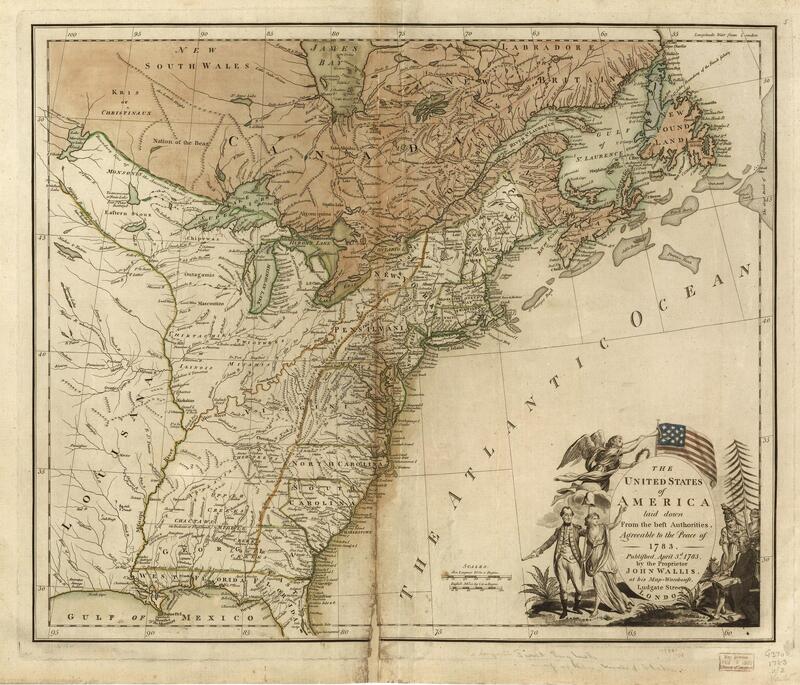
Additionally, Anderson explains that the modern nation is “both inherently limited and sovereign.” It is limited because of its finite boundaries, while newer notions of national sovereignty grew out of a particular historical context, he argues. According to Anderson, during the Enlightenment and Revolutionary era, the idea of a nation was conceptualized to nullify “the legitimacy of the divinely-ordained, hierarchal dynastic realms.”83 Anderson’s definition of a nation, therefore, relies heavily on the notion of community: “the nation is always conceived as a deep, horizontal comradeship. Ultimately it is this fraternity that makes it possible.”84
For Anderson, nations are social fraternities that rely on the comradery of its citizens for sustainability. Importantly for this project, Anderson also shows how fraternization is prioritized in a nation’s early stages of development. Benedict Arnold, America’s most infamous traitor, and the American Revolution, the definitive event that led to the creation of the United States, are focal points for this chapter.85
The American Revolutionaries needed to establish the parameters of a community of loyal and honorable members in order to sustain the American cause.
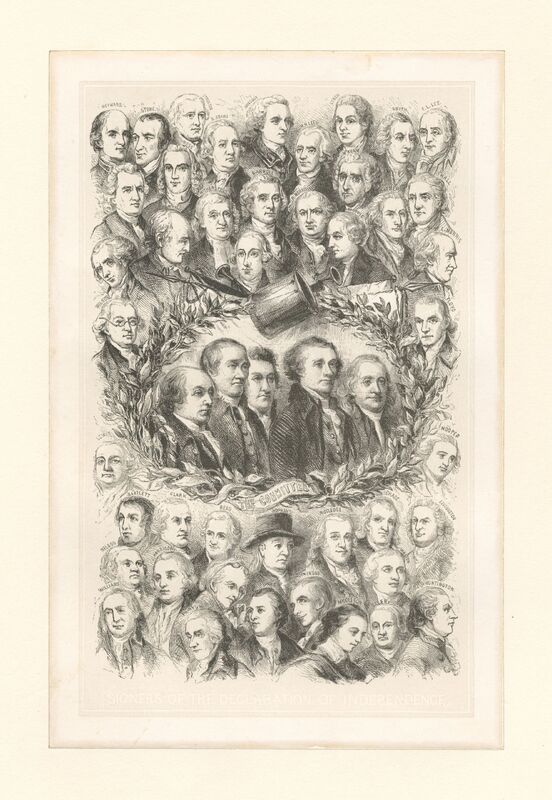
Consequently, Arnold’s betrayal and subsequent depiction as a figure lacking virtue were used by the American Revolutionaries to sustain the American cause and ensure the success of the American nation.
Arnold’s treason played a critical role in helping to establish those parameters for this new American community. To allow undesirable members to remain would have proven detrimental to the formulation of the United States. Thus, deviants like Arnold had to be cast out of America’s social fraternity and its “imagined community” for the sake of the emerging nation. Arnold was devoid of virtue, honor, trust, and allegiance and was primarily seen as a villain.Despite his actions at Fort Ticonderoga, Lake Champlain, and the Battles of Saratoga, these were not enough to compensate for his betrayal of the Revolutionary cause.
The American Revolution’s historical context solidified Arnold’s reputation as America’s most infamous traitor. Arnold the traitor became the focus on which Revolutionary crowds projected their unfocused anxiety. Arnold’s treason reignited popular fervor for the American Revolution at a crucial time; in this way, his betrayal and subsequent depiction as a figure lacking virtue served as a catalyst for the earliest definition of American nationalism.