The Historical Context
Between 1778 and 1780 public support for the American war effort wavered
dangerously. According to Charles Royster, difficulties with recruitment, appropriate divisions of military service, and a lapse in popular fervor demonstrated to the Revolution’s worried leaders a faltering of public virtue.86 Royster states that the “willingness to sacrifice through serving in the military or through providing regular pay and supplies for the army had fallen sharply by the summer of 1778.”87 The lack of public interest and commitment concerned nationalist leaders. The strength and effectiveness of the Continental Congress was another concern. According to Willard M. Wallace, Arnold’s decision to switch sides came at a time when the nation was especially unstable and Congress was weak.88 Wallace explains that in addition to its other problems, Congress was facing financial ruin. As a solution, Congress turned to the states for money and supplies to help manage the costs of the war. The Continental army had “barely survived the worst winter of the Revolution, one far more disastrous than that at Valley Forge.”89
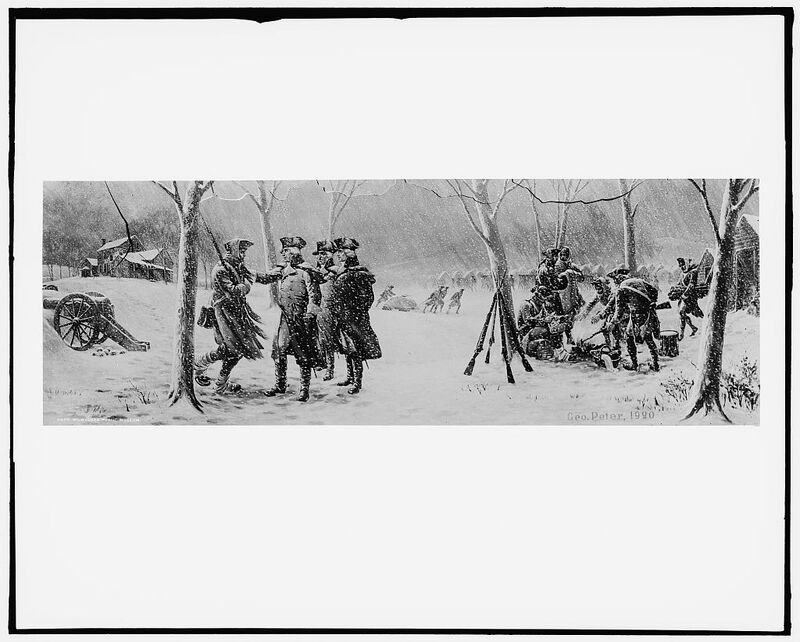
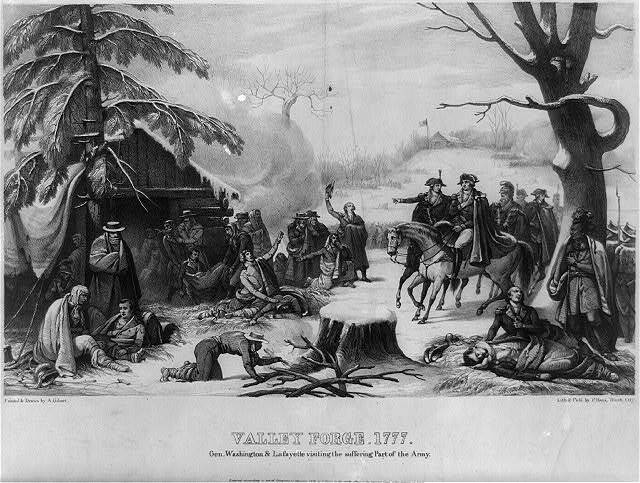
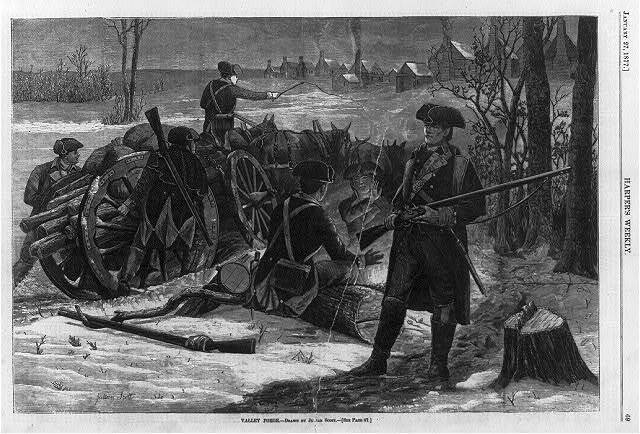
By 1780, the army was “disintegrating, starving, and penniless, and few officers could have been more alert to the significance of its condition than Arnold.”90 In a secret letter to British Army Officer, John André, Arnold expressed his doubts: “the mass of the People are heartily tired of the war and wish to be on their former footing…The present Struggles are like the pangs of a dying man, violent but of short duration.”91 His observations also assured the British that the American cause was failing. The Continental Army’s low enlistment numbers proved Arnold’s assertions correct. In May 1780, Washington had 3,000 men under his charge.92
In contrast, Sir Henry Clinton returned from his South Carolina conquest with 4,000 troops, while the British force in New York was 12,000.93 Washington saw the contrast. Recruitment in 1776 was not an issue whereas in 1780 recruitment numbers were significantly low.
Faced with these daunting numbers, Washington in May 1780, spoke of the danger facing the American army in a letter to Congress: “Unless a system very different from that which has long prevailed be immediately adopted through the States, our affairs must soon become desperate, beyond the possibility of recovery…Indeed, I have almost ceased to hope.”94 The loss of Charleston, South Carolina, on May 12 and the rout of Horatio Gates’ southern army at Camden, South Carolina, on August 16 deeply wounded Washington and his compatriots.95
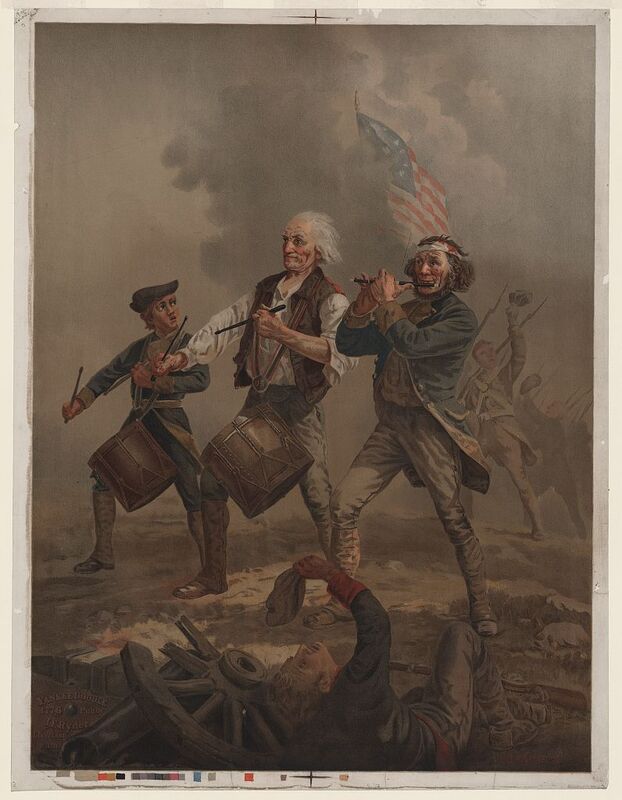
Clearly the American Revolution by 1780 did not have the same rage militare or popular fervor that was prevalent in 1775. 96 L.J. Ducharme and G.A. Fine state that “morale among citizens and soldiers was at an all-time low” and even the most gallant supporters had felt that the war had lasted far too long.97 Moreover, a crise de conscience gripped the minds of patriots throughout the course of the war. The crise de conscience was “an anguished ordeal of choice between patriotism and loyalty.”98 Thus, this anguished ordeal within patriots furthered dissent for the Revolutionary cause and prevented the resuscitation of the rage militaire.
Significantly, Arnold’s actions exposed the Continental Army’s vulnerabilities even more. If Arnold and Andre’s plan bore fruit, Great Britain would achieve potentially irreversible gains. Richard C. Brown argues that if the plot to capture West Point had succeeded, “Clinton could control the Hudson River” and separate “New England from New York as Burgoyne had tried to do in 1777.”99 Furthermore, the loss of Arnold, a leading American general, was advantageous to the British. George Washington and the Continental Congress were terrified that Arnold’s betrayal would intensify the patriot’s crise de conscience and encourage insurrection among American inhabitants.
As a dramatic example of this sudden uncertainty, Washington, in his initial reaction to Arnold’s treason, declared, “Arnold has betrayed us. Whom can we trust now?”100 Arnold’s defection dealt a massive blow to the Patriot cause and there was justified concern that it would inspire other American soldiers to defect. In response, on September 26, 1780, Washington delivered a strongly-worded message to the rest of the army. In his General Orders message, Washington was quick to condemn Arnold in stark terms, making specific reference to the loss
of virtue:
Treason of the blackest dye was yesterday discovered. General Arnold, who commanded at West Point, lost to every sentiment of honor, of public virtue and private obligation, was about to deliver up that important post to the hands of the enemy. Such an event must have given the American cause a dangerous, if not a fatal wound; but the treason has been timely discovered.101
A PDF version of the letter from Samuel Frost discussing Washington's reaction is posted below:
On September 27, 1780, Washington wrote to Jean-Baptiste Donatien de Vimeur, Comte de Rochambeau, that traitors “are the growth of every country, and in a revolution of the present nature it is more to be wondered at that the catalogue is so small than that there have been found a few.”102 Arnold could no longer be the hero he once was: he was the young nation’s newest villain.
Arnold’s condemnation took hold almost immediately. According to Martin, “after
September 25, 1780, Benedict Arnold’s name was to be forever associated with the absence of light, which Revolutionary patriots linked to the darkness of British tyranny and the devil’s wickedness.”103 Arnold’s newfound associations were essential in making him a foil for the construction of American nationalism. Arnold’s treachery marked him as being without virtue and an inadmissible member to the American community.
Arnold was everything that virtuous American citizens should not aspire to be. His lack of virtue made him repulsive and that showed in effigy processions. For example, just days after Washington’s message, a Benedict Arnold effigy appeared on the streets of Philadelphia on September 30, 1780. In the effigy, Arnold was
depicted as having two faces, symbolizing his duplicity. He was also depicted as carrying a mask in his left hand while a letter from Beelzebub resides in his right. And, finally, standing behind him was the Devil who was “shaking a purse of money at the general’s left ear, and in his right [hand] was a pitchfork, ready to drive him into hell as the reward due for the many crimes which the thief of gold had made him commit.”104 The effigy drew the attention of a crowd of bystanders and Continental officers who wished to make a mockery of Arnold. Stephen
Brumwell describes the scene:
Surging through the city’s wide, straight streets, the crowd followed an illuminated procession that moved slowly toward the wharves fronting the broad Delaware River. The cavalcade was led by several gentlemen on horseback, backed by a line of Continental Army officers on foot. Then came a score of the city’s own militiamen, with flickering candles thrust into the muzzles of their shouldered muskets. Behind them marched drummers and fifers playing “the Rogue’s March,” a jaunty tune long used by the British army when casting out disgraced miscreants,
and since adopted by its opponents.105
The procession symbolized the collective destruction of Arnold’s heroic image. His “apostasy, not his past glories” were on display. Indeed, Americans’ remembrances of Arnold’s “past glories” no longer mattered. Rather, the image of a two-faced effigy would replace Arnold’s once heroic image. The joint vilification of Arnold also served as a communal achievement as it united a spectrum of community members. These community members included gentleman, army officers, militiamen, fife and drummers and a crowd of civilians. These individuals collectively reaffirmed their ties as good Americans and transformed the once “imagined community” of the United States into an actual one.
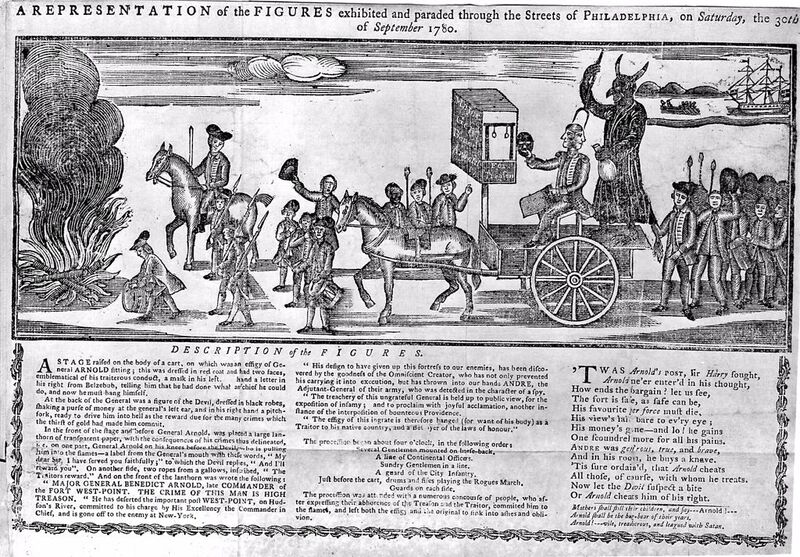
Arnold effigies also took to the streets in Boston, Providence, and in other cities.106
Arnold’s treason united these communities. In each effigy, the Devil always accompanied Arnold. Effigies “displayed-Arnold in a cart with the Devil, Arnold in a coffin with the Devil, Arnold on a gallows with the Devil.”107 Arnold’s association with the Devil starting in September 1780 lingered for decades. But the sprouting of effigies marked a resuscitation of the Revolutionary spirit and actualized a growing sense of nationhood. Carl Van Doren argues:
No event in the course of the whole Revolution did so much to intensify patriotic sentiment. After Arnold few patriots could continue to hold in their minds a lingering image of the war as a conflict between political parties. This was between nations, and Arnold had not merely gone over from Whig to Tory but had betrayed-or tried to betray-his country. It was treason, for there was a state to be treasonable to. Arnold as traitor helped fix a new image of the United States in the mind of its people.108
For Van Doren, Arnold’s treason reignited 1775’s rage militaire by enabling patriots to see that they were fighting a war that was between two nations, Great Britain and the United States of America. Nathaniel Philbrick agrees: “it was as a traitor that [Arnold] succeeded in galvanizing a nation. Just as the American people appeared to be sliding into apathy and despair, Arnold’s treason awakened them to the realization that the War of Independence was theirs to lose.”109
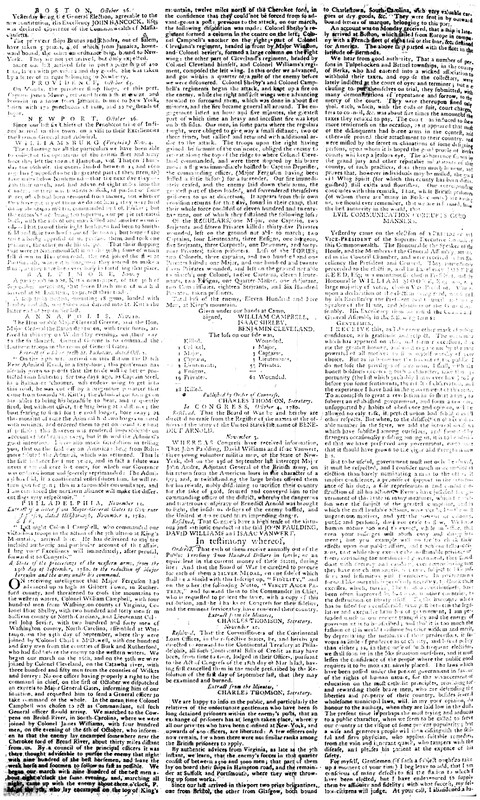
The Pennsylvania Gazette, Nov. 15, 1780. Discusses the removal of Arnold's name from the US Continental Army Register. Click on the image to see the text up close and personal.
As part of the effort to formally acknowledge Arnold’s betrayal and to bolster the
embattled sense of American nationalism at this critical hour, Congress removed his name from the army register’s list of officers on October 4, 1780. While for obvious reasons his name had to be deleted from the list, Congress’s action was also done as a way to proclaim officially and publicly that Arnold was no longer a member of the American fraternity. 110 Smith claims that Arnold’s treason “served as a lesson about the dangers of forsaking the national cause.”111 Removing Arnold’s name from the register demonstrated the consequences of his actions.
Arnold was no longer a man of American honor and virtue. He was a traitor and that is all he could ever be. Smith writes that Washington had already “seized on this astonishing treachery and was the first to use it to champion American honor and virtue.” In reaction to Arnold’s treason, Washington said:
Great honor is due to the American Army that is the first instance of Treason of the kind where many were to be expected from the nature of the dispute-and nothing is so bright an ornament in the character of the American soldiers as their having been proof against all the arts and seduction of an insidious enemy.112
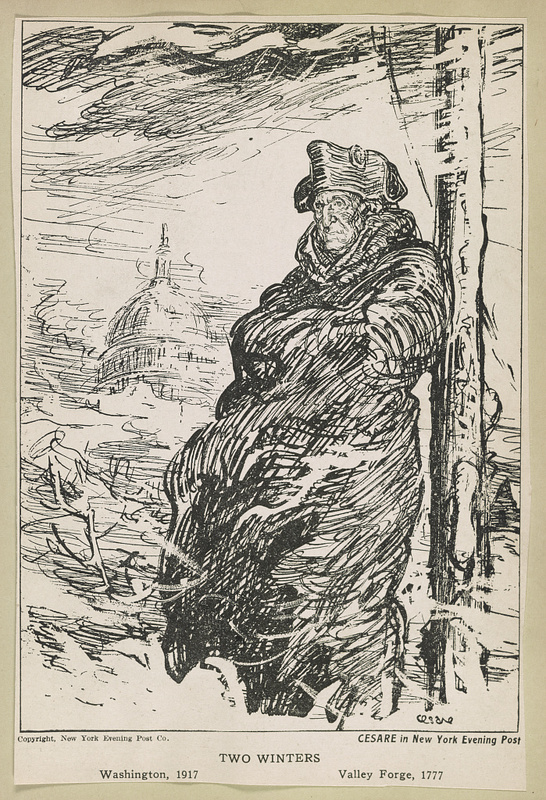
Together, George Washington and the Continental Congress used the crisis of Arnold’s treason to shore up flagging spirits, reinvigorate American nationalism and dissuade dissent. Arnold’s actions prompted a powerful and negative public reaction that reinvigorated popular fervor for the Revolution. Thus, Arnold was tossed out of the pantheon of heroes. Instead, a new legacy was born of Arnold the corrupted villain; one “so ‘vile’ and ‘treacherous’ as to be forever ‘leagued with Satan.’”113