All posts by admin

Porfolio Blog Post

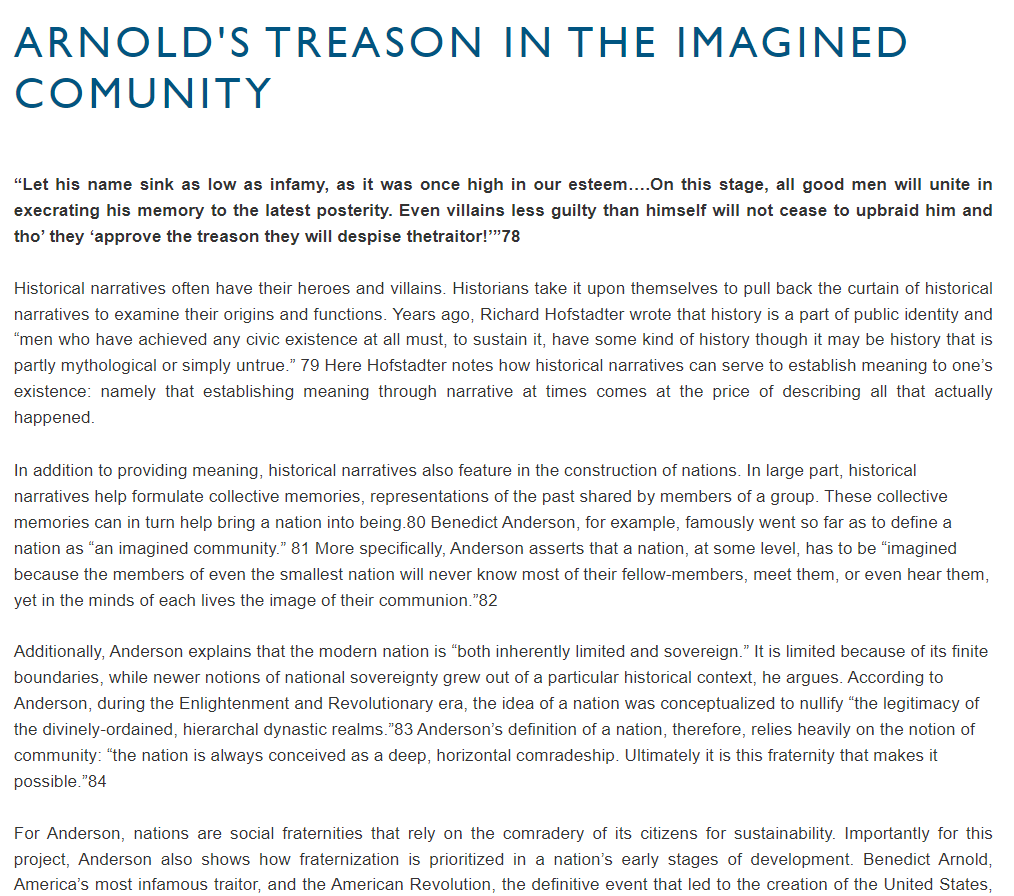
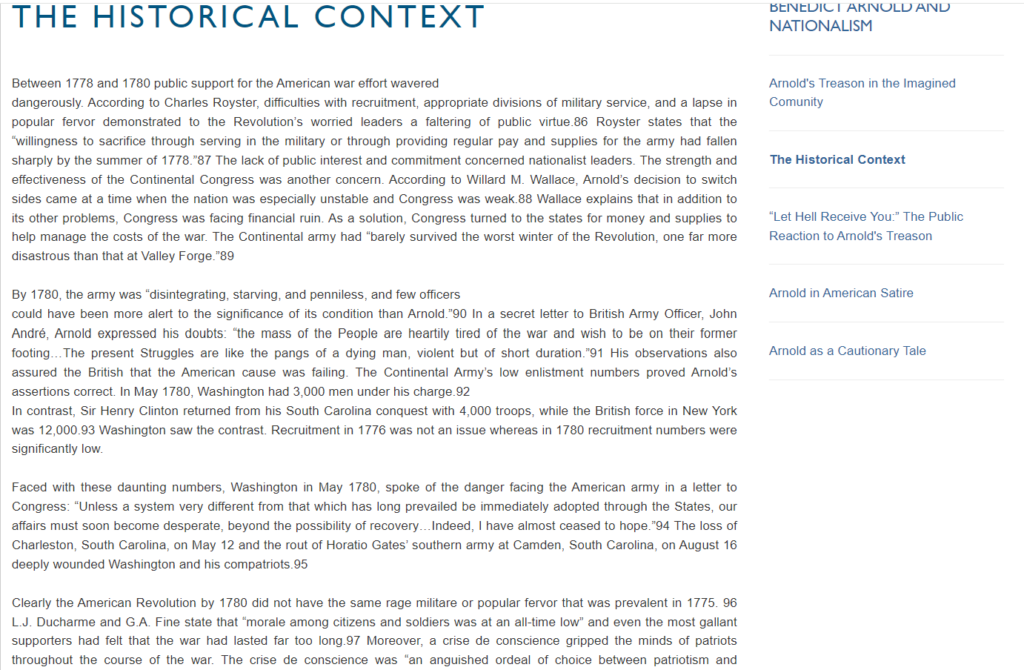
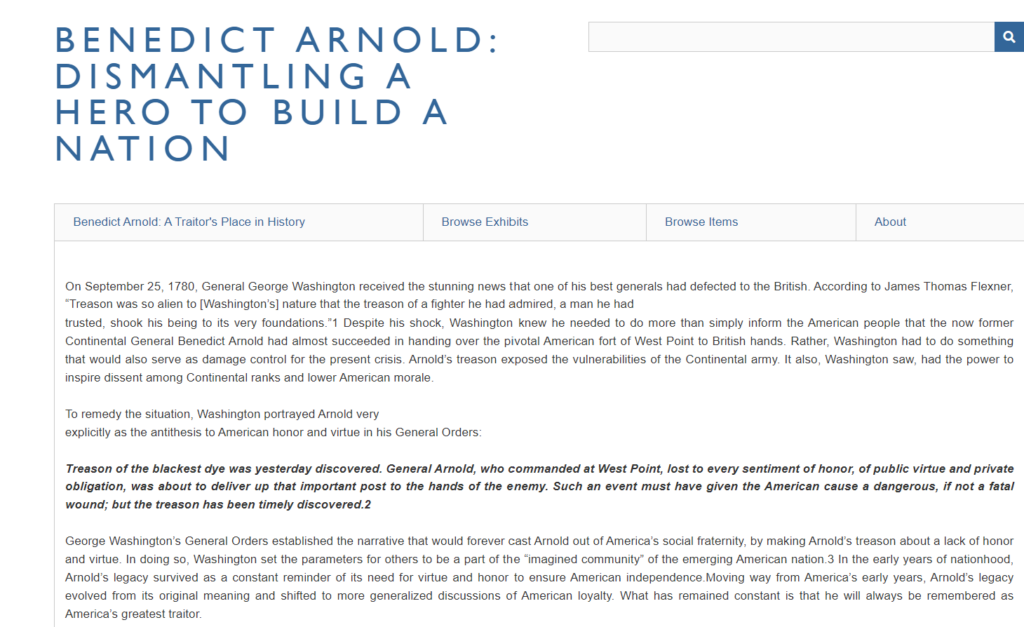
My project’s academic argument is posted in the introductory page of my omeka site for visitors to see and it surrounds the following concept: 

George Washington’s General Orders established the narrative that would forever cast Arnold out of America’s social fraternity, by making Arnold’s treason about a lack of honor and virtue. In doing so, Washington set the parameters for others to be a part of the “imagined community” of the emerging American nation.3 In the early years of nationhood, Arnold’s legacy survived as a constant reminder of its need for virtue and honor to ensure American independence.Moving away from America’s early years, Arnold’s legacy evolved from its original meaning and shifted to more generalized discussions of American loyalty. What has remained constant is that he will always be remembered as America’s greatest traitor. 


That said, the overall purpose of my site is to serve as a prototype  for a public website dedicated to examining how Benedict Arnold’s act of treason played a role in shaping the national identity of the United States. The site’s purpose is educational and the target audience includes k-12 educators and school children. The site will connect to common core standards as well as aspects of the curriculum from Maryland, DC, and Virginia public schools. 
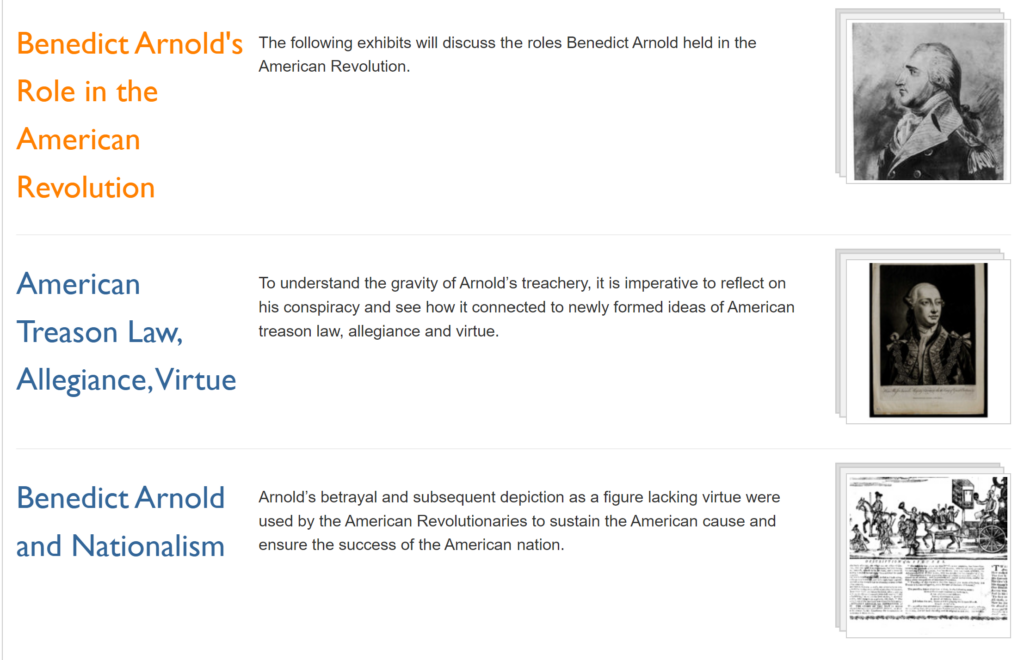
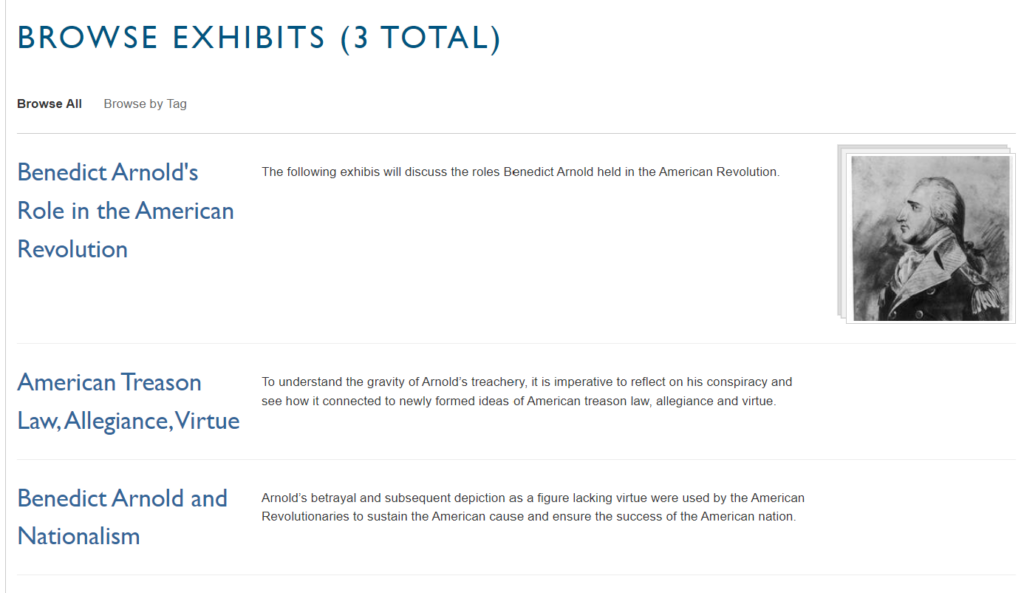
The three exhibits and their purpose.

In designing the site, I kept in mind my audience as well as the site’s educational purpose. Three exhibits are used to show support for my academic argument. Within each exhibit, I have used plugins such as PDF embed, Image Annotation, and Text Annotation to show off and differentiate my primary sources and also to provide a deeper analysis  of the sources themselves. Students need assistance in understanding certain types of vocabulary that align with their curriculum standards. In addition, I have embedded YouTube videos on my site to make the content more interactive for my students. 
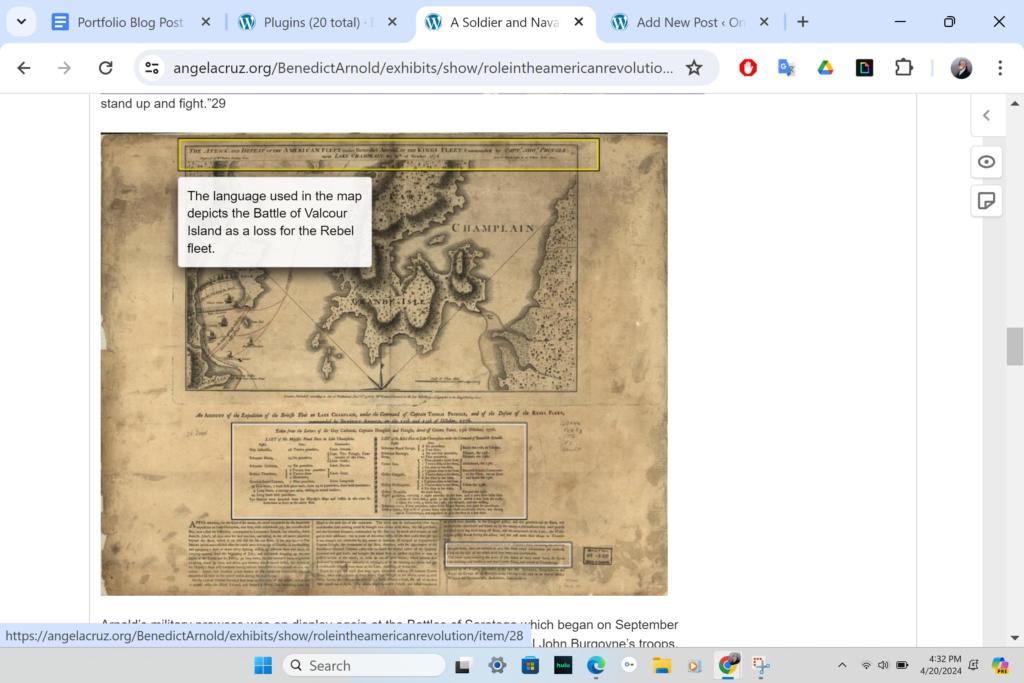
The use of the image annotation plug-in.


I will evaluate my work by checking in to see how much of the site can be connected to curriculum standards and how much it aligns with educational Universal Designs for Learning.
 

Portfolio Blog Post 2

Current methods and technologies have enabled public history to reach new audiences. Methods include storyboarding, site based story telling and community outreach while technologies include omeka collections, exhibition mobile exhibits, podcasts, and virtual reality.  A commonality amongst current methods and technologies is a focus on user interactivity, cultural relevance, and entertainment value. As a result, methods and technologies can be combined together in the creation of public history initiatives. 

Personally, I have used storyboarding as a means of paper-prototyping the layout and design of my prototype omeka site and collection. The planning process allowed me to consider the visual interactives I would include in my site for the purpose of user engagement and entertainment. In a similar manner, site based storytelling, the use of a specific location’s history to initiate a historical narrative, has also been helpful for user engagement and entertainment. Projects related to site-based storytelling have emerged onto the public history scene in the last couple of years such as mobile interpretive projects.

A notable mobile interpretative project is the Cleveland Historical project, a mobile application and mobile optimized website. The project’s focus is the city of Cleveland, Ohio and utilizes multimedia, sound, geolocation to share the city’s cultural history. The Cleveland Project has easy to use archival software that allows “interpretative content to be customized for local history events, community endeavors or classroom learning.” (Tebeau, 26). 

Community outreach methods have also been used to engage local communities in their own cultural history. It is a collaborative approach to history that bridges the divide between museums and the communities they reside. Local community members then have the opportunity to contribute to the historical narrative. The Penderlea Homestead Museum has utilized community outreach by encouraging locals to curate their own exhibits. These exhibits are then informed by the personal experiences and perspectives of community members. In doing so, these exhibits are culturally relevant to the surrounding locality. 

Podcasts and virtual reality have an entertainment element that sets them apart from other technologies. These two technologies can use multimedia to engage and educate a wider range of audiences with interpretative content. The interpretative content can be delivered through either audio or visual storytelling that can engage the listener. Podcasts can reach a wider audience through streaming platforms like Spotify, Itunes and YouTube Music while virtual reality can be used on computers and consoles as well as within museum exhibits. Just like radio, podcasts have the ability to expose listeners to history at their own pace whether it’s on a drive to work or cleaning the house. In the same vein, virtual reality can intrigue younger audiences and allow them to interact with history in a more thought provoking manner through visuals. 

Project Progress Update 4

I have managed to fill out the three skeleton exhibits from my previous update.

These were  American Treason Law, Allegiance,  Virtue and Benedict Arnold and Nationalism. 

I have filled out scholarly information videos and images related to these topics.

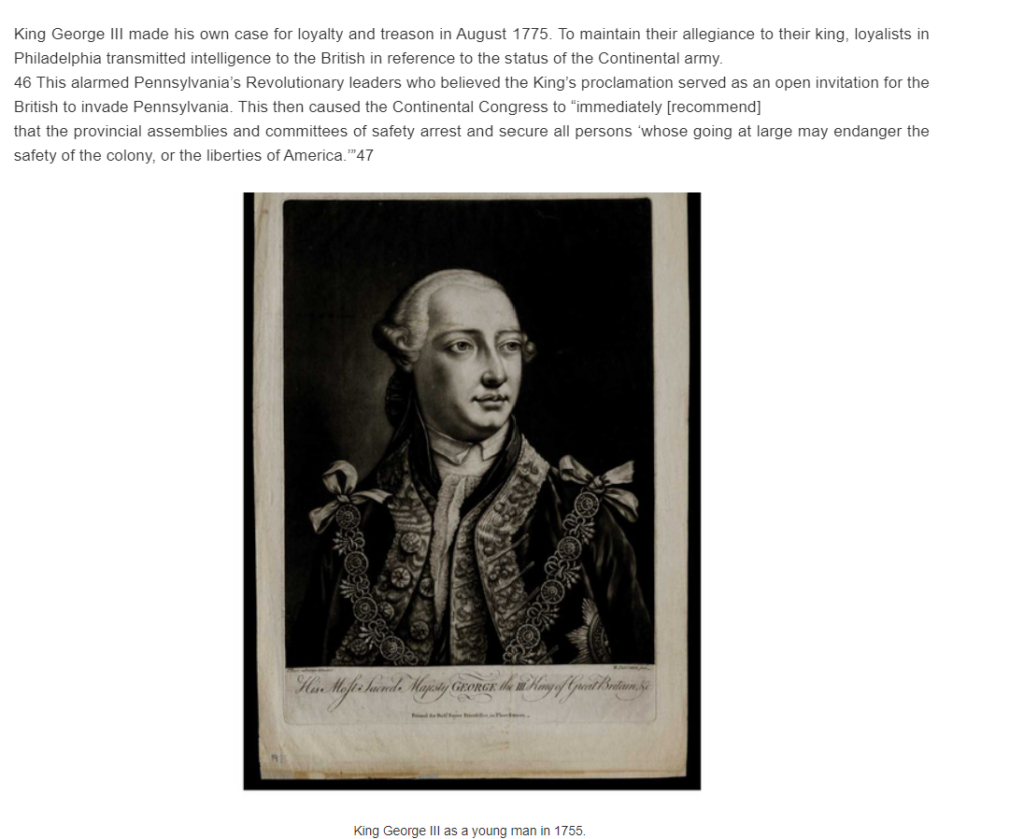
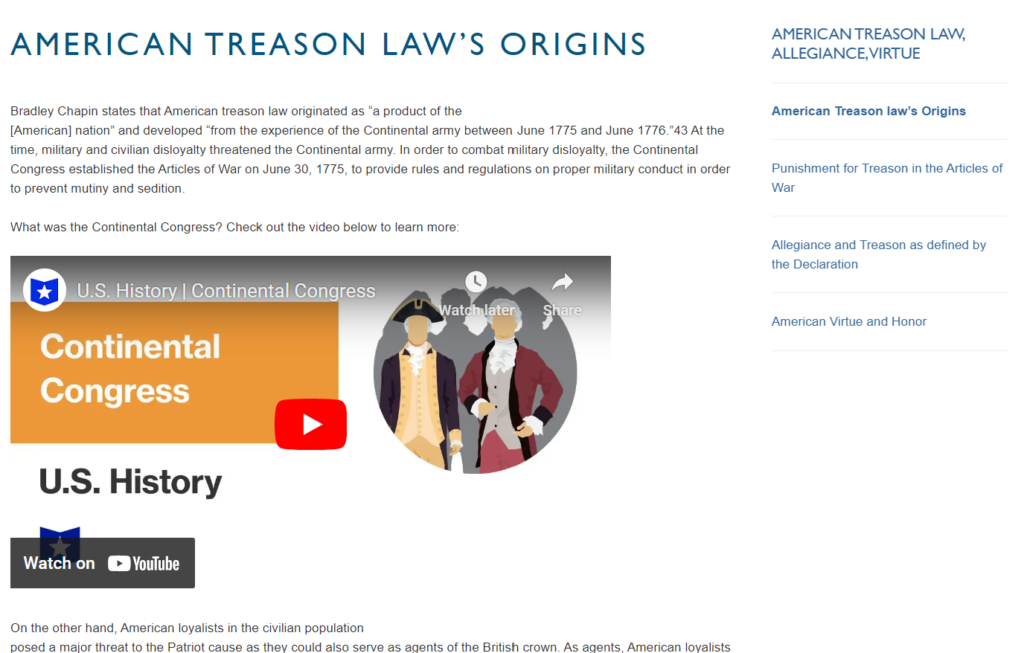
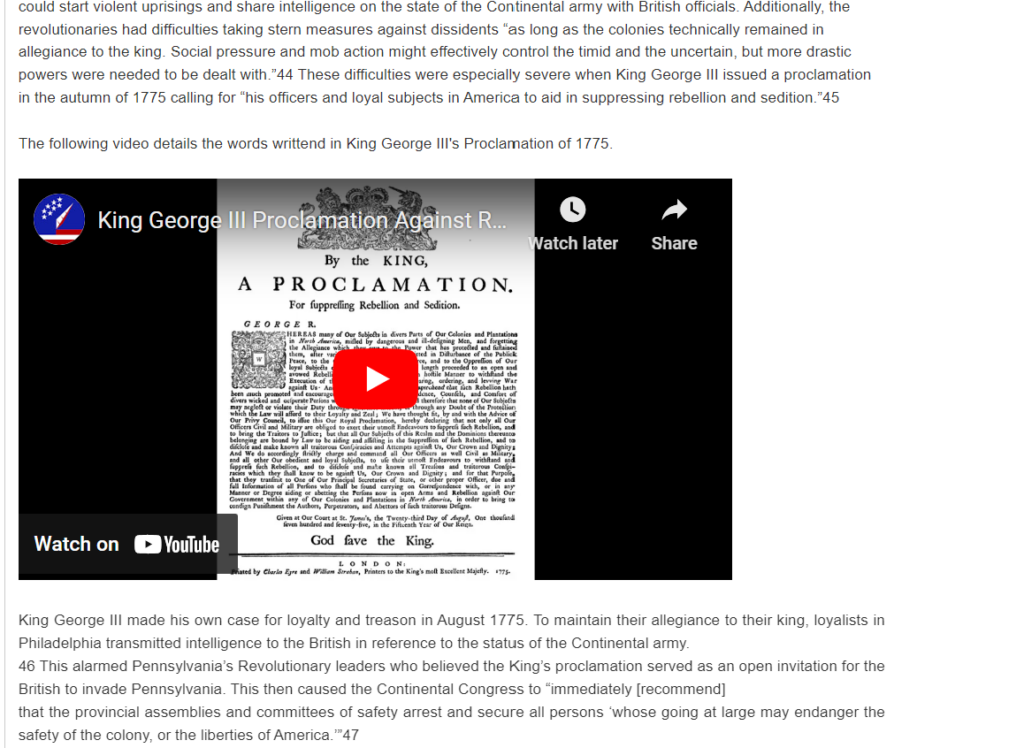
I tried my best to think about what my students would prefer if they were to look through an educational website. Videos are better for capturing the attention of site visitors. It also helps explain a heavy topic better than me reexplaining what was detailed in King George’s Proclamation of 1775.

I added a photo of King George III since he was mentioned in this exhibit.

I did my best to chunk up the exhibits and be consistent and thorough in the narrative I was trying to explain in each exhibit.

I also provided a link to a collection of Congressional transcripts to allow visitors to see what was said in the Articles of War.

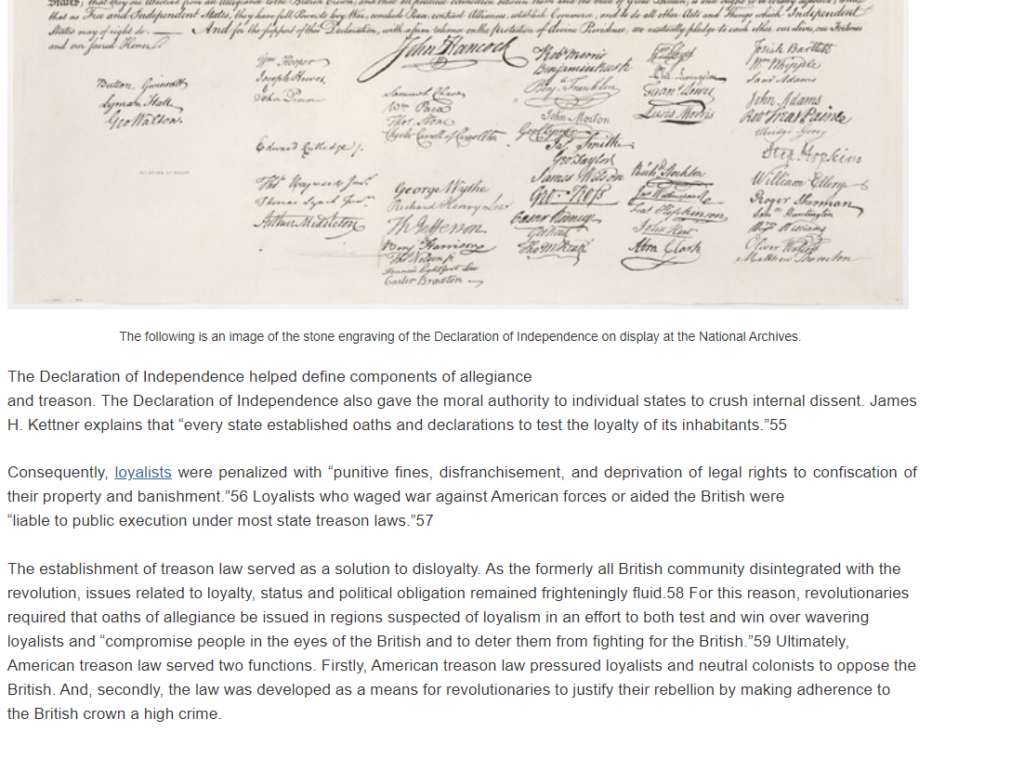
I then decided to add an image of the Declaration of Independence since ideas of allegiance and treason can be traced backed to the Declaration of Independence.

In the next couple of images, you will see that my exhibits become more reliant on text and primary source information than the others that were previously seen. I’m having some diffulty finding images that are relevant for these next couple of sections.

Much of the Benedict Arnold and Nationalism Exhibit is primary source and text heavy as they provide an analysis of the primary sources.


The next step would be to provide links in the metadata back to the areas in which I retrieved some of my resources.

Project Progress Update 3

Since my last update, I have accomplished the following:

  • Finished the first draft for my exhibit “Benedict Arnold’s Role in the American Revolution.”

  • Added an Introductory Page related to the site to inform visitors on the site’s focus.

  • Created skeletons for two additional exhibits called: American Treason Law, Allegiance, Virtue and Benedict Arnold and Nationalism

I have also deleted old exhibits and pages that are no longer relevant for my site. I have reordered my simple pages to have my introductory page first. The order is the following.

For my newest exhibits, I need to locate images related to the passages written. As usual, I also need to work on my footnotes.

History Pin Review

History Pin Review:

I used historypin.org to investigate pinned historical sites in my area. I was surprised to see that there were few pins posted for local historical markers.

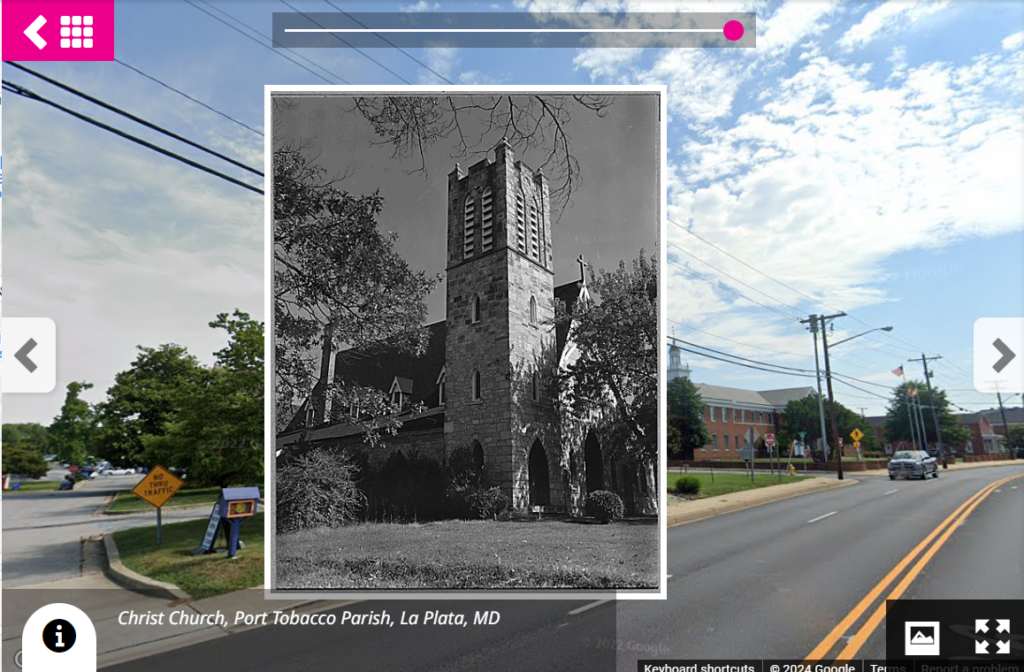
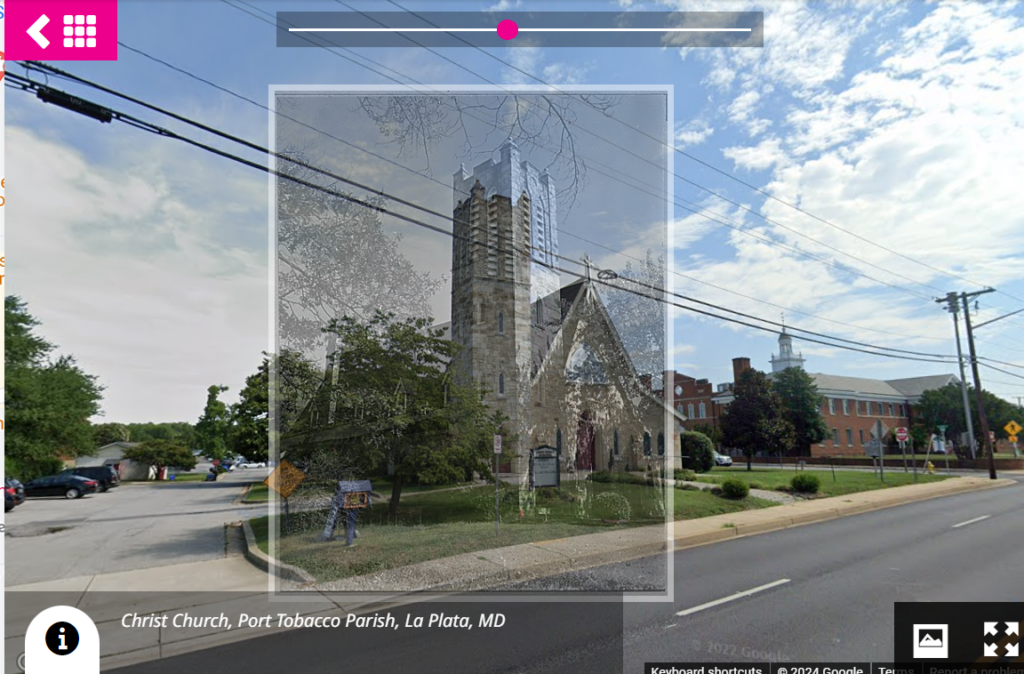
I know there are plenty of more historical locations surrounding my place of living as well as my workplace so this must be something I can complete in the future. That said, the historical location I focused on was Christ Church, Port Tobacco Parish, La Plata, MD.


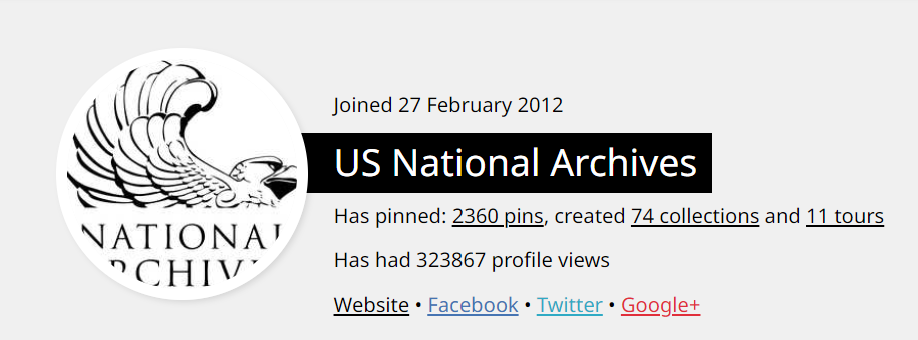
The pinner was the US National Archives and not a local from the area.

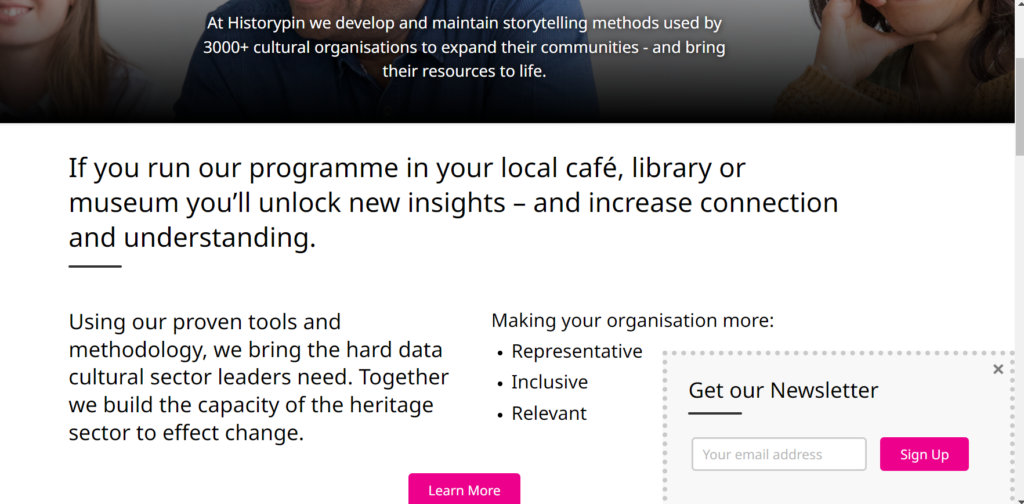
Historypin’s about information is transparent about its mission and its role in maintaining cultural history.

This demonstrates that historypin.org works in partnership with libraries, archives and museum groups although individuals can join the site in maintaining a digital history about their local communities. The information the US National Archives gives for Christ Church is brief and includes an image of the Church from 1941.

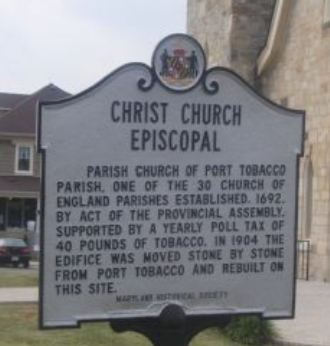
I feel like more information related to Christ Church can be better given by a local. For instance, historical markers are on the property-detailing the significance of the location.

The church is also open for church services and locals can go inside to take further photography related to the location and building’s architecture.

The history pin site attempts to use place-based techniques associated with how locations change over time by placing an old photo of Christ Church over a modern day photograph. Historypin’s theory is associated with continuities and changes over time. This is made evident by the transparency scroll tool the site has in order to allow site visitors to see the similiarities and differences of the location at different historical time periods.

Project Progress Update 2

To be honest, I was not happy with the way in which my exhibits were set up. I originally planned to have three sub exhibits:

The Heroic Arnold

The Treacherous Arnold

American Treason Law, Allegiance and Virtue


Although I managed to update the original Heroic Arnold with the necessary historical information I felt there was an overload of information on one individual webpage. This original setup was not user-friendly and would easily tire out the reader-especially secondary students like Faith Cooper. Thus, I chose to separate the historical information in the Heroic Arnold section into more sub exhibits. 

This is the current exhibit setup:

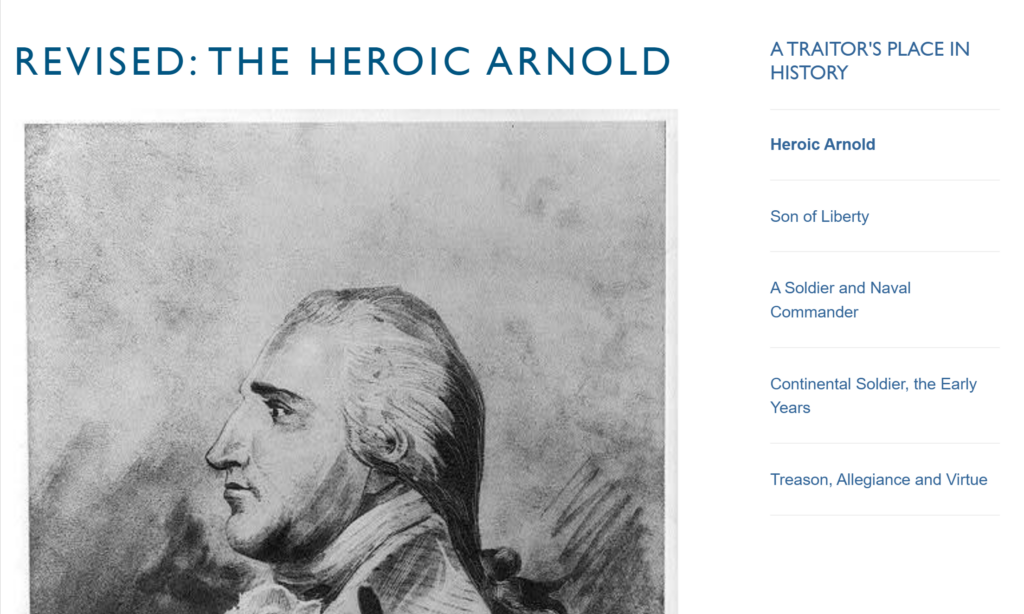
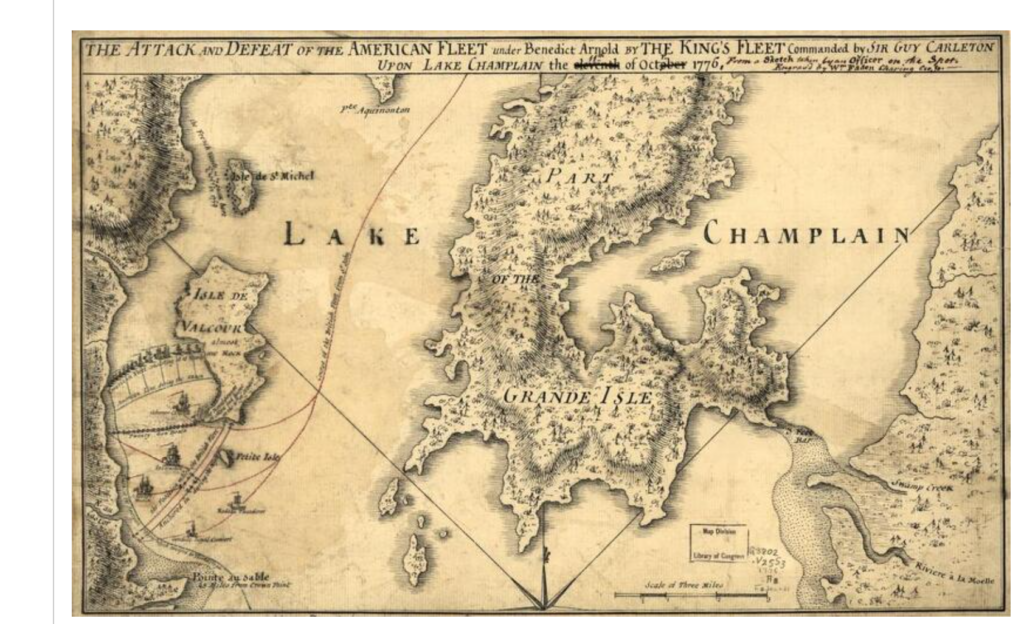
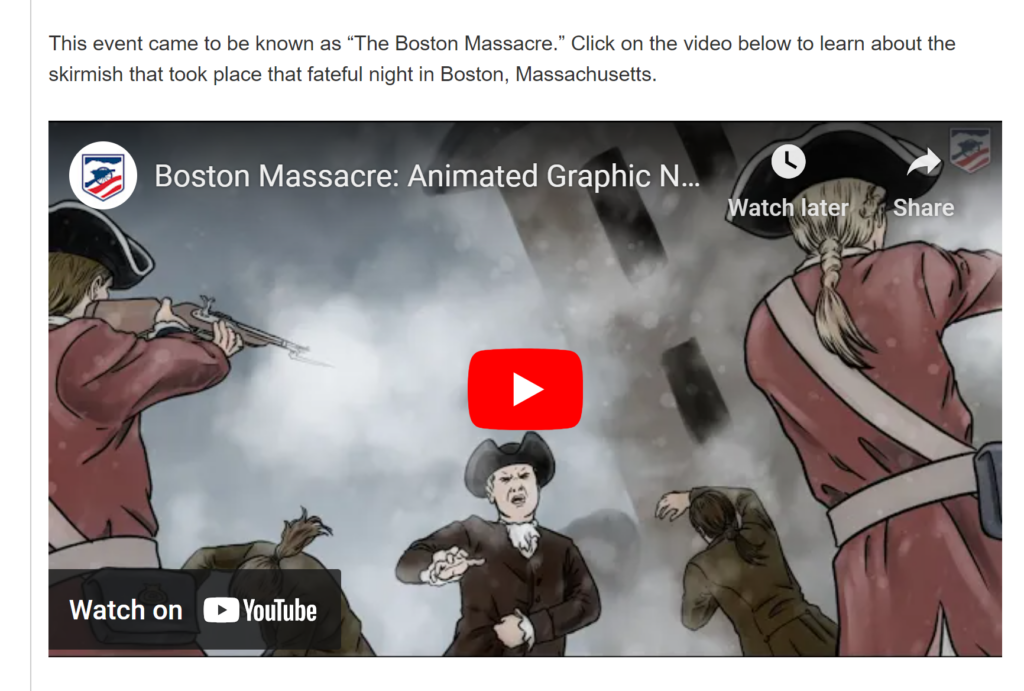
The sub exhibits go in chronological order and detail certain stages of Arnold’s life. The stages are associated with Arnold’s involvement in the American Revolution. To make these sub exhibits pop, I decided to incorporate relevant artifacts and images associated with events discussed in historical narrative. I also provided embedded historical videos created by the American Battlefield Trust as a resource for further information on the Boston Massacre, Boston Tea Party, Battles of Lexington and Concord and the Battle of Valcour Island. The videos themselves are more student friendly and allow for me to differentiate and diversify the historical content for teachers and students. 

Relevant Images Examples:


Video Example:


Challenges:

  • Making the site user friendly
  • Revamping the original layout of the exhibits
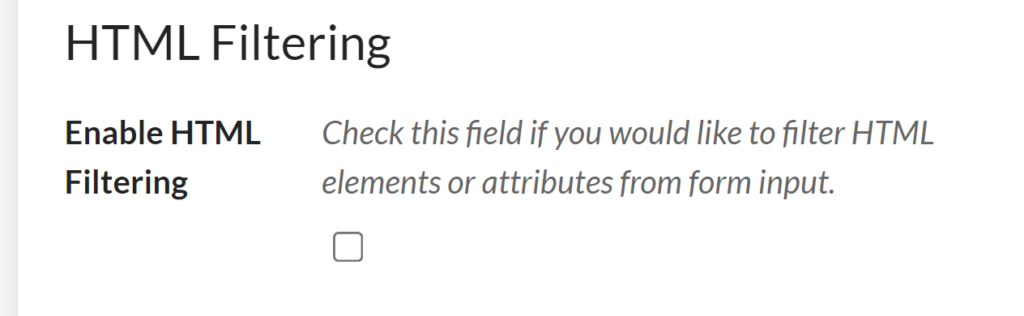
  • The YouTube Import Plug-In did not work so I had to rely on embedding YouTube Videos within the text blocks. Initially, I had issues with embedding the YouTube videos in the text because I hadn’t unchecked the box for “Enable HTML Filtering” fortunately I was able to gather tips from Omeka forums on how to fix these issues.
I just needed to uncheck this box in the security settings in Omeka to enable embedded videos.

Next steps: I need to update and format my footnotes correctly. I need to finish writing the historical information related to Treason, Allegiance and Virtue as well as create my exhibit for Arnold and Nationalism. 

Project Update 1

In terms of my prototype project, I am in the process of creating the exhibits related to my Benedict Arnold site. I am currently working on one of two or three exhibits that will be featured on the site. The first exhibit will be titled “A traitor’s place in history.” In this exhibit there will be three sub exhibits titled:

  • The Treacherous Arnold (Will explain Arnold’s treason)
  • American Treason Law, Allegiance and Virtue (Will explain the historical context surrounding treason law, and american virtue to explain the impact of Arnold’s actions in 1781) 

I uploaded the following plug-ins to assist in the curation of my site such as:

  • Docs Viewer (to allow users to see historical documents into the site)
  • Exhibit Builder (to allow administrators to build exhibits)
  • Exhibit Image Annotation (to allow administrators to annotate primary documents and highlight important details surrounding the object)
  • Omeka Footnotes JS (to allow administrators to site their historical research)
  • PDF Embed (to allow administrators to embed PDFs related to historical documents on the site)
  • Text Annotation (a differentiation tool that allows site users to highlight and mark the site text for their own historical research and knowledge)
  • Timeline (to allow administrators to create a timeline as a differentiation tool)
  • YouTube Import (to allow administrators to embed future YouTube videos into the site for educational purposes)


Challenges and Next Steps:

I am having issues formatting my footnotes in a way that is not obtrusive to the text that I have provided for the sub-exhibits. I know I need to reformat the text as a result as well as divide the information I have provided into the sub-exhibit into another sub-exhibit. I was hoping the footnotes plug-in would simply provide a small pop-up that shows the citation information instead of giving a page break for traditional footnotes . Footnotes typically disrupt the the flow of the reading. The footnote numbers are also out of order making me want to correct this by the next update. I am also having issues finding copyright free images to include in my exhibits. Additionally, I need to upload my images and text related to the sub-exhibits: Treacherous Arnold and American Treason Law, Allegiance and Virtue. So, I have a bit of work ahead of me. 

Project Personas


Stephanie Mitchell

Quote: “Students have difficulty navigating websites, using links in resources and require a lot of scaffolding. But, they have no problem navigating TikTok because it’s social.”

Demographic: 

  • Age: 42
  • Gender: Woman
  • Occupation: Middle School Social Studies Teacher
  • Income: $55,000
  • Education: Teacher Certification, Master’s in Education, Endorsements in Social Studies
  • Nationality: American

Descriptive Title: Mrs. Mitchell is a Social Studies Teacher at a public Middle School located in the DMV area.

A Day in the Life Narrative: Two days every marking period, Stephanie attends a full day of professional development to learn about new technological strategies and materials she can use in her classroom. It is also an opportunity to share ideas with her colleagues. Ever since Covid, technology is used on a daily basis in the classroom and students’ academic proficiency levels have fallen. Consequently, Stephanie tries to use it to improve student engagement by using social studies related websites and educational multimedia platforms. These sites sometimes also include the gamification of course content well as informative databases/archives. But, in spite of the fact she is already using technology, students struggle to appropriately use the provided technological resources and websites. They have issues navigating websites and finding the necessary resources. They also don’t seem too interested in learning new content. Phones are a frequent issue as they distract students from the content.  Students tend to be using social media in the midst of class by taking photos or videos of what they are doing and posting it to Snapchat or Tiktok. It is also not helped by the fact that students also struggle with their reading and writing skills on a national level. They struggle with reading context clues and engaging with the content. There is a lack of enthusiasm amongst most students.

End Goal: To improve student engagement with social studies by using educational technology to improve interest.


Faith Cooper:

Quote: “I have always struggled with social studies. BCE, Mesopatamia, 1700s…I just don’t get it.”

Demographic:

  • Age: 13
  • Gender: Girl
  • Occupation: Middle School Student
  • Income: None
  • Education: Kindergarten through Eighth grade
  • Nationality: American

Descriptive Title: Faith attends a public middle school in the suburbs of Northern Virginia.

A Day in the Life: Faith attends school on a daily basis. Her school does not have a restrictive cell phone policy so she has her cellphone on her at all times. She checks her socials like TikTok frequently if she is ever bored in class. As a result of Covid-19, the school system issued laptops to every single student in the county and she depends on it to complete digital assignments for most of her classes. She uses the following platforms to complete work: Google Drive, Kami, Lumio, Code.org and Schoology. She is an average student who does her best. She achieves mostly B’s and C’s. Social studies is her least favorite class because there is a lot of reading and writing and she also does not see how it is relevant to her. She prefers to procrastinate by going on YouTube, checking TikTok or playing a game on her phone. Her parents have recently gotten on her case about her grade in social studies as her interim report card reflected a D in Social Studies.

End Goal: To get better grades in social studies and try to like it so she doesn’t get grounded for having a D on her report card.


Benedict Arnold Omeka Site Project Proposal

Nature of the Request: 

The objective of this project is to create a prototype  for a public website dedicated to examining how Benedict Arnold’s act of treason played a role in shaping the national identity of the United States.  Many have forgotten that Benedict Arnold was once an American hero. On several occasions, Arnold took gallant strides as a military general. Notably, Arnold was applauded for his actions at Fort Ticonderoga, Lake Champlain, and the Battle of Saratoga. However, his heroic actions do not compensate for his betrayal of the Revolutionary cause. Arnold betrayed the cause when he entered secret negotiations with Great Britain to hand over West Point, a pivotal American fort. After his attempt to hand over West Point, Arnold defected to the British and became a brigadier general. As brigadier general, he led invasions into the colonies. By defecting to the British, Benedict Arnold made a name for himself as America’s greatest traitor while also playing a role in solidifying the American National identity. The proposed project will serve to demonstrate in what ways Arnold’s image was used to reinvigorate and solidify the success of the American Revolution. Consequently, it will serve as an example as to how members of a nation can be tossed out and exemplified for the sake of a national cause. This type of exemplification has been repeated throughout history with the antagonisms of public political figures as well as the targeting of minorities in times of extreme disarray to preserve the national community. 

Technology:

The current prototype uses the Omeka website platform as the project’s technological foundation. Omeka allows users to exhibit historical content and interpretation. Plug-ins will be utilized to demonstrate and showcase the historical content in a more engaging manner for the target audience. These plug-ins include Docs Viewer, Exhibit Builder, Exhibit Image Annotation, PDF Embed, Text Annotation, Timeline and YouTube Import. 

 A collection of 10 items is currently being used to demonstrate the type of information that will be shared with a public audience. From here, Omeka will continue to exhibit digital artifacts that serve as evidence as to how Benedict Arnold shaped the national identity of the United States. 

Target Audience:The target audience for this site will include K-12 educators and secondary students. The target demographic is expected to have a basic understanding of website functionality. That said, teachers will need to provide scaffolding to students in order to offer them guidance on how to navigate through the site.

Humanities Content: 

Consequently, Arnold’s legacy as a traitor triggered the following inquiries: How did Benedict Arnold become America’s greatest traitor? What is treason? What is nationalism? What was the state of the nation when Arnold defected to the British? How did Arnold’s reputation as a war hero disappear in the public sphere? What and who contributed to blackening Arnold’s name? Who were the important individuals that played a part in spreading anti-Arnold sentiment? What publications spread the news about Arnold’s betrayal? Which publications villainized Arnold? How did perceptions of Arnold change over time from the late eighteenth to twenty-first century ? What moments in time caused images or discussions of Arnold to resurface in popular media? What historical figures has Benedict Arnold been compared to? 

Historical research will be conducted using the following scholarship and primary sources. Biographies and historical accounts from scholars like Charles Royster, Willard Randall, Walter Powell, Joyce Lee Malcolm, James K. Martin, Nathaniel Philbrick , Lori J. Ducharme, Gary A. Fine, and Grenvill Ingalsbe will be used. Articles and scholarship discussing American Treason Law and Nationalism will be consulted. Primary sources will focus on articles, literature, wartime correspondence, political cartoons and periodicals from the end of the eighteenth century to the present. 

Personas and Technology

Research related to personas and technology have made me reconsider the needs of my target audience and my engagement strategies. The focus of my Public Digital History Project is the infamous American General and turncoat Benedict Arnold. I was hoping to create a website dedicated to offering content and interpretation on the historical figure such as wartime correspondence, periodicals, biographies and narrative histories. By learning about personas, I have carefully considered in what ways I will cater to a potential audience. Technological changes with social media have also allowed me to consider the impact technology will have on my project’s audience engagement. 

According to Interactive Designer and User Researcher, Shlomo “Mo” Goltz, “a persona is a way to model, summarize and communicate research about people who have been observed or researched in some way.” More specifically, a persona is a character who is created to represent “a specific portion of people in the real world and enables the designer to focus on a manageable and memorable cast of characters” (Goltz). The purpose of personas are to enable designers to create projects that will be of interest to a certain demographic. In my case, I can create personas who are based off of my target audience of secondary educators and students. The needs of these personas will surround issues related to teaching strategies, classroom learning, scaffolding, curriculum standards, student media literacy and students’ social studies proficiency skills. 

Internet and technology research will also change my approach to my final project. The Pew Research Center has presented research findings related to American social media and internet use amongst teens. One research article determined that YouTube is the most “Widely used online platform” while TikTok has grown its user base to 33% in recent years. This information is significant as young adults lean more towards the use of social media like TikTok and “95% of all teens report having access to a smartphone.” Secondary students are more likely to engage with technology that is social, especially since a majority of teens use “TikTok (63%), Snapchat (60%) and Instagram (59%).” By considering this information, it may be a good idea to include some type of socialization on my prototype website to allow users to engage with one another. 

In short, mobile connectivity and social media have drastically changed in recent years. This impact will only grow as time goes on and will change the way public history curators engage with a potential audience. As a result, personas will be used more widely to determine the wants and needs of a certain demographic.