Category Archives: Public History Project Updates

Final Thoughts on Digital Public History

When I first began my course in Digital Public History I first wrote the following statement related to the Audience and Content in Public History Projects:

[Public History] can be redefined as a “society in which a broad public participates in the construction of its own history” (Grele, p.48). This shared process implies that public historians must work with communities to develop the content that will manifest into a public history project. In other words, public history projects belong just as much to the community as it does to the historian as they cannot exist without one another.


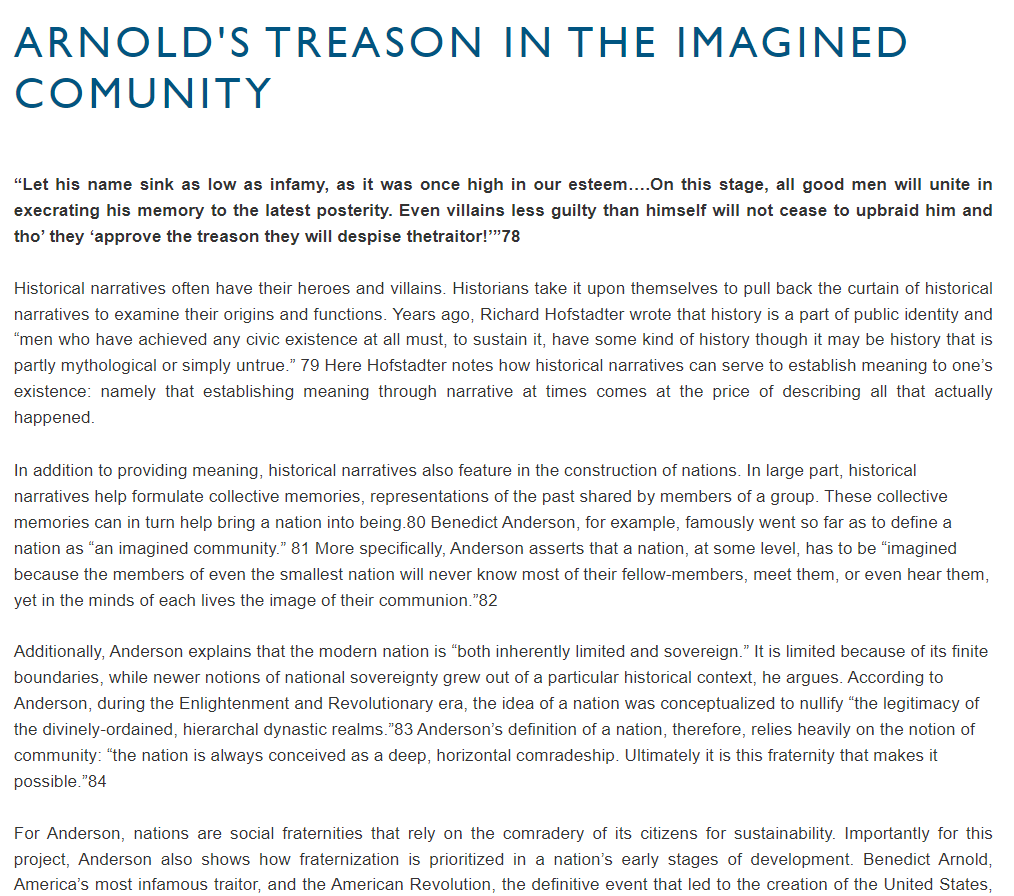
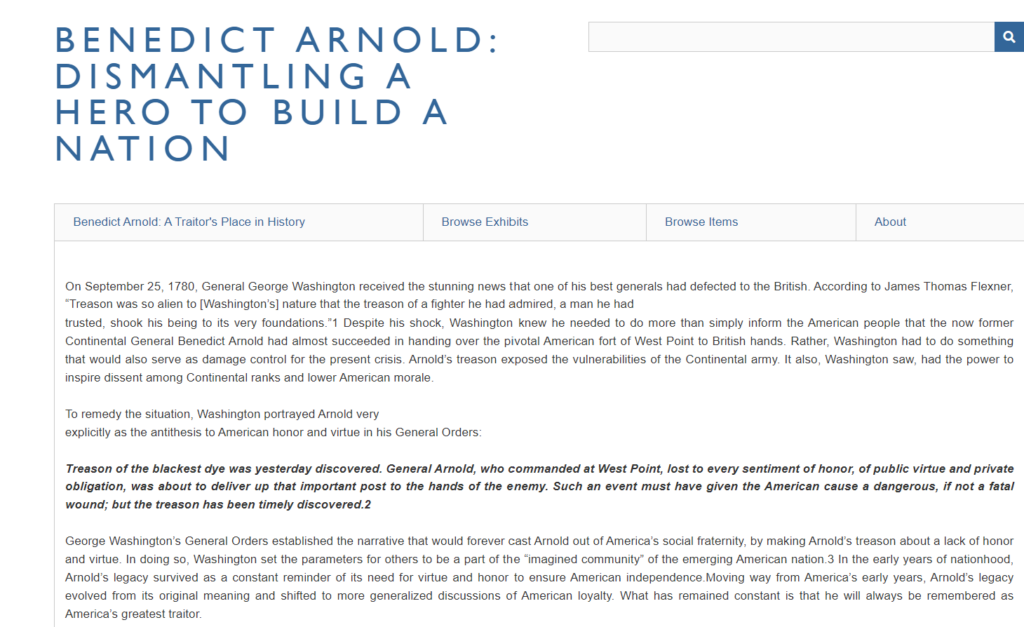
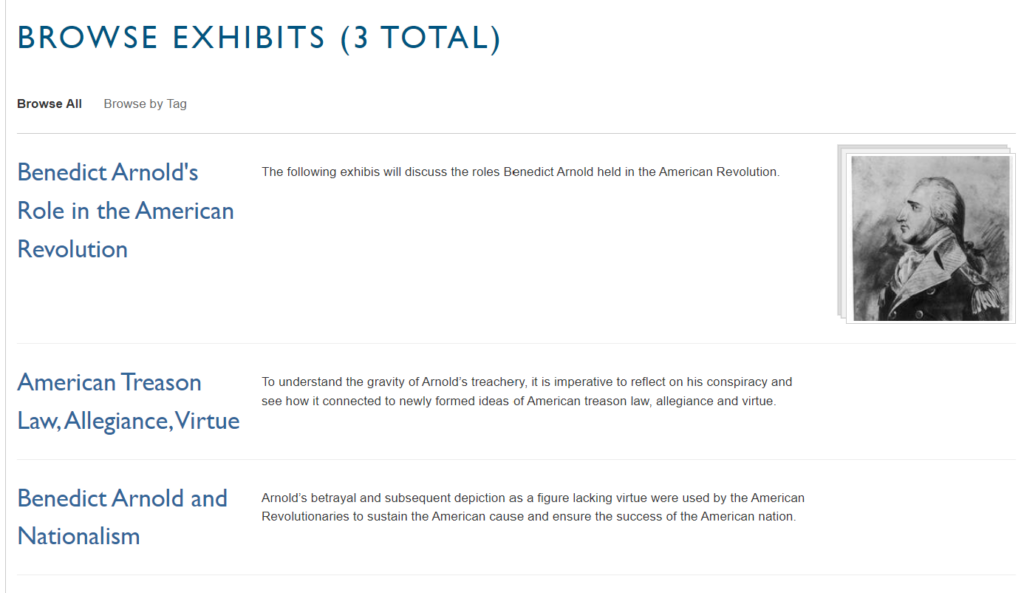
This statement continues to reign true as I conducted my own public digital history project. In my own case, I chose to focus on the disgraced individual Benedict Arnold. Arnold is someone of which I have been fascinated with for a long period of time. So, I decided to build an Omeka Website with “mostly” interactive exhibits dedicated to him. After revisions, the Omeka site is organized in the following ways:

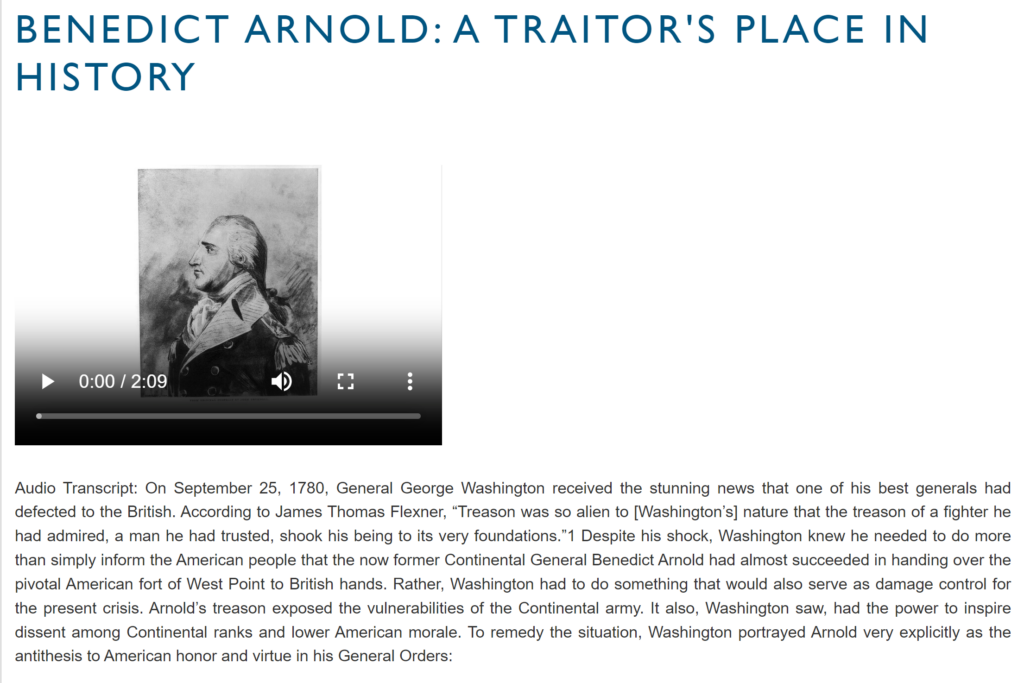
An introductory page that provides an introductory video (it is kinda cheesy) and a transcript (a differentiation tool) as well as links to the three exhibits featured on the site: The introductory video was my attempt at using audio as a means to detail a historical narrative as well as to explain the academic argument behind the site. ( It is far from becoming a podcast I’ll just say that. )
The three exhibits are organized into three intertwining themes to explain the history of Benedict Arnold.
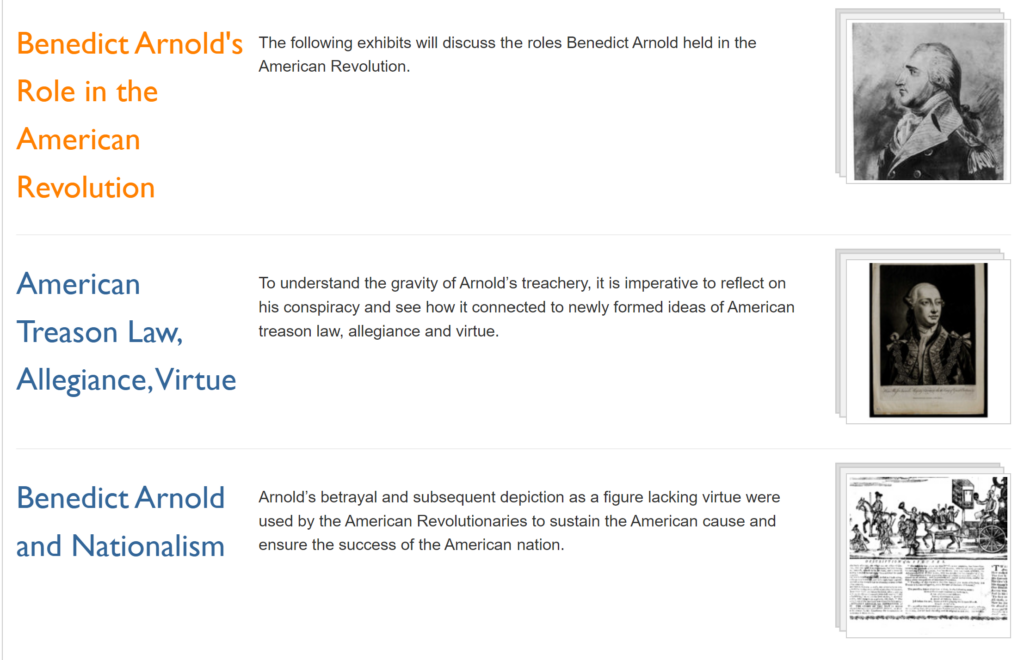
The three exhibits and their purpose.

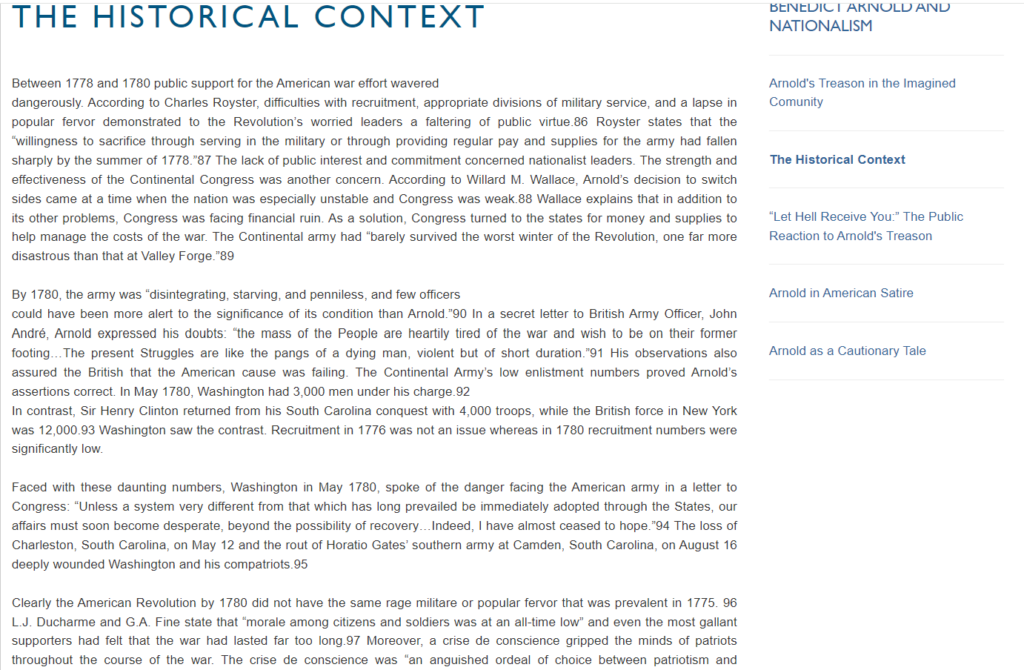
Historical essays are featured in each exhibit with footnotes linked at the bottom of each page.The footnotes are placed in a google doc that is accessible for site visitors. 
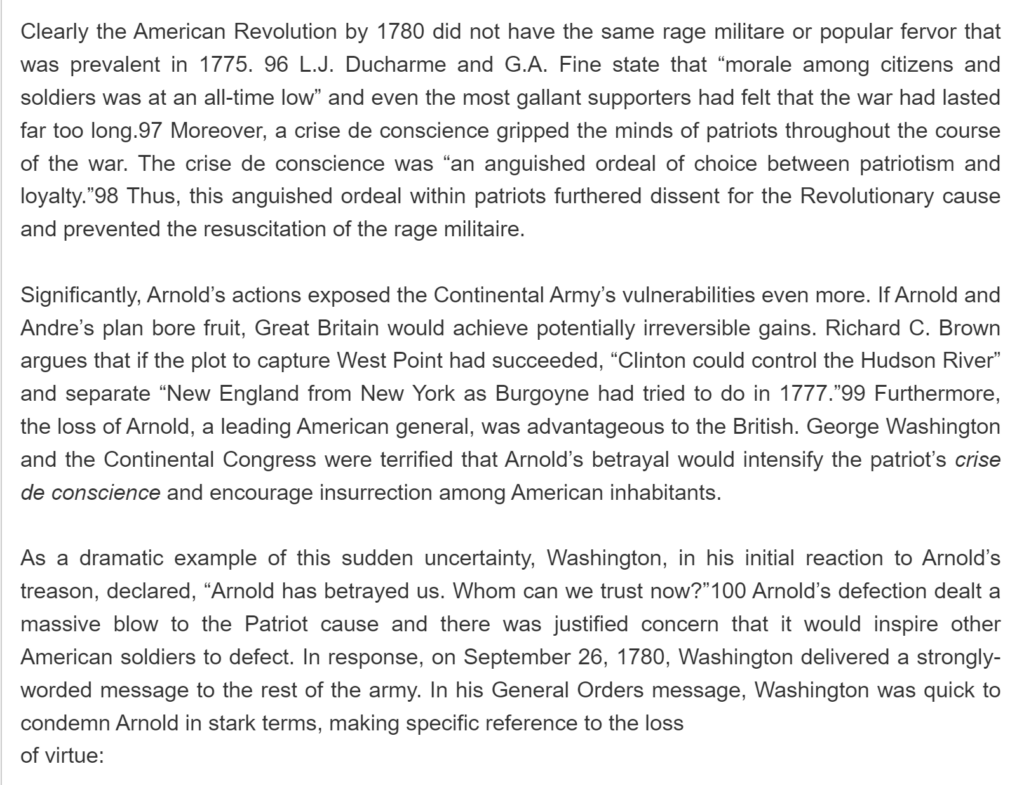
Footnotes

Historical essay

Shared authority  “the interaction of scholarly authority and wider public involvement in presentations of history” (Frisch,1990, p.53) was considered in the creation of this project. Personas such as Stephanie Mitchell, a k-12 educator, and Faith Cooper, a 13 year old student, were used to hypothesize the needs of the target audience. These needs were determined by the qualitative data I acquired from interviews in my school site. The needs I considered were differentiation and engagement strategies, relevant connection to curriculum standards, and accessibility. I have used plugins such as PDF embed, Image Annotation, and Text Annotation to enhance and differentiate my primary sources. In doing so, users are given a deeper analysis of the sources themselves. Image Annotation helps students understand certain types of vocabulary that align with their curriculum standards. The annotations also provide historical context. In addition, I have embedded YouTube videos on my site to make the content more engaging for my students.
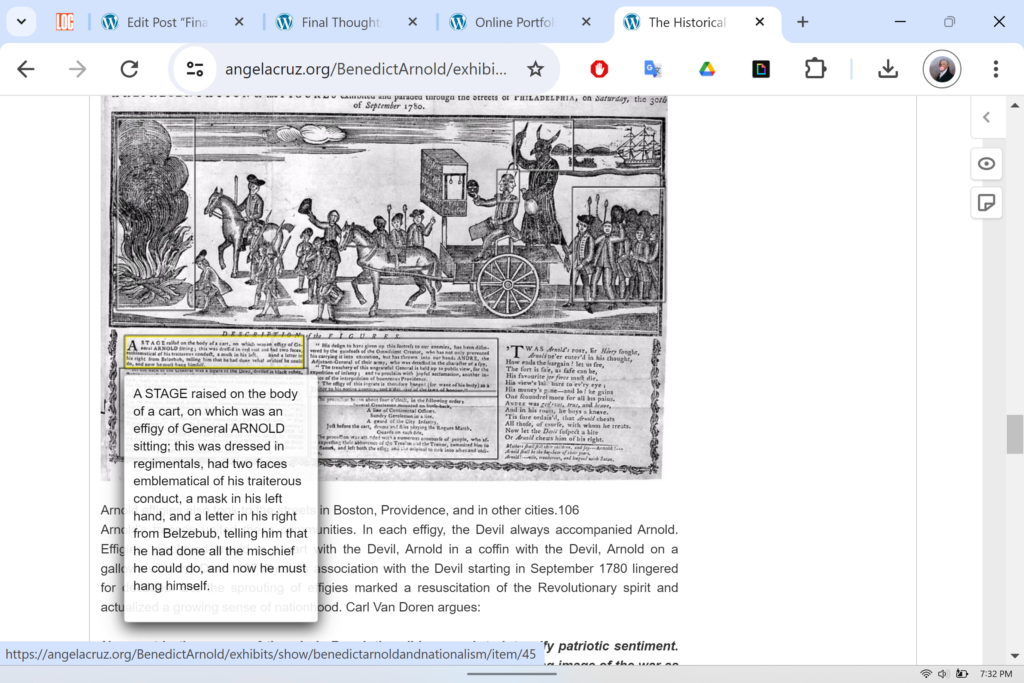
Example of Image Annotation Plug In on a political cartoon

Within my exhibits, I utilized photos from archives and databases like the Library of Congress, the Digital Public Library, the New York Public Library, Jstor, Wikipedia and American newspapers. All of these photos were placed as items in my Omeka site to establish where the images were located.  A total of 58 items are in the item library.

Photos/items are placed as lone files, files with text, moving carousels, annotated images, or PDFs. These images are supposed to serve as supporting evidence for the historical essays as well as to provide historical context to the time period being discussed. Their sites of origin are linked in the metadata to follow copyright protocol and give credit to the creators. 

Fortunately, my Digital Public History class has enabled me to consider the academic and pragmatic purpose behind my prototype Omeka site. I have had to consider my intended audience as well as the technologies I would use to engage and educate my intended audience. I have also had to take into consideration the items/artificats I would use to exemplify my site’s academic argument.
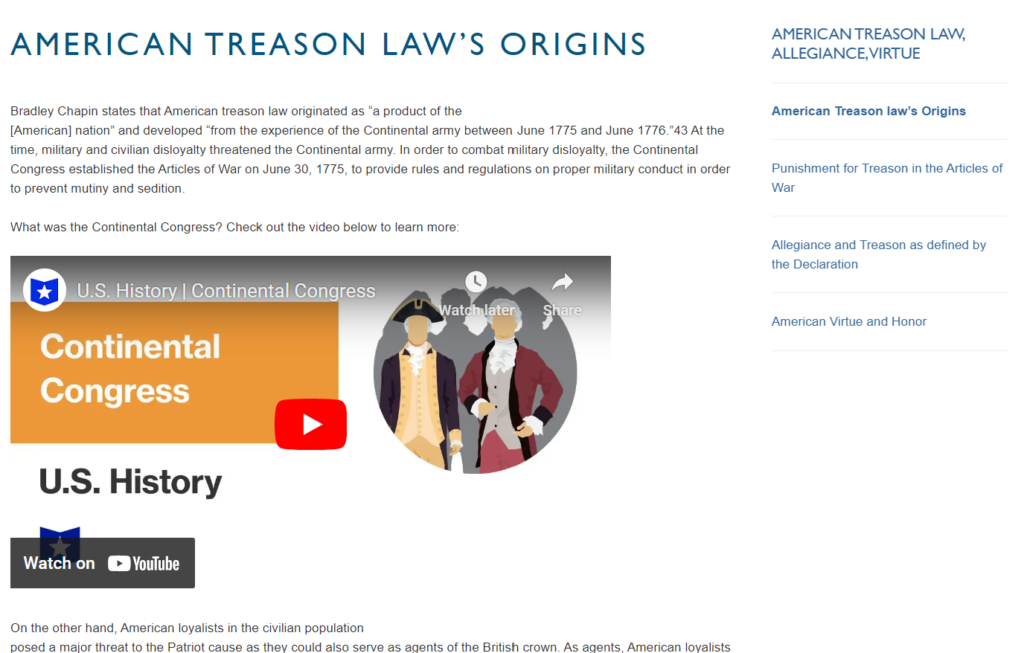
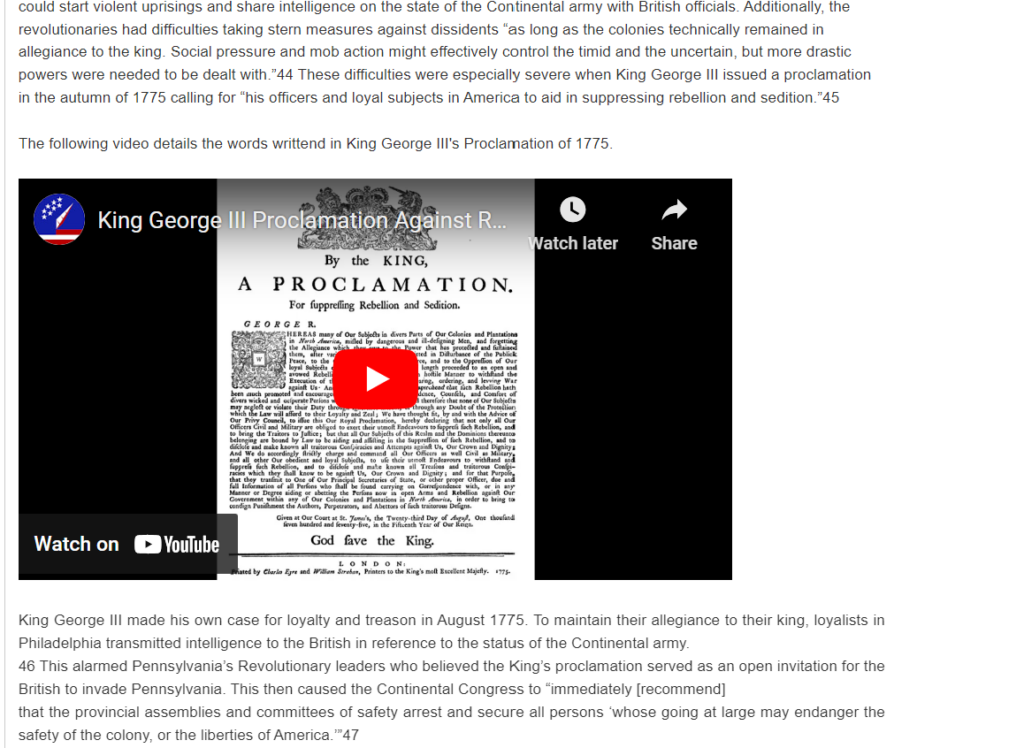


Project Progress Update 4

I have managed to fill out the three skeleton exhibits from my previous update.

These were  American Treason Law, Allegiance,  Virtue and Benedict Arnold and Nationalism. 

I have filled out scholarly information videos and images related to these topics.

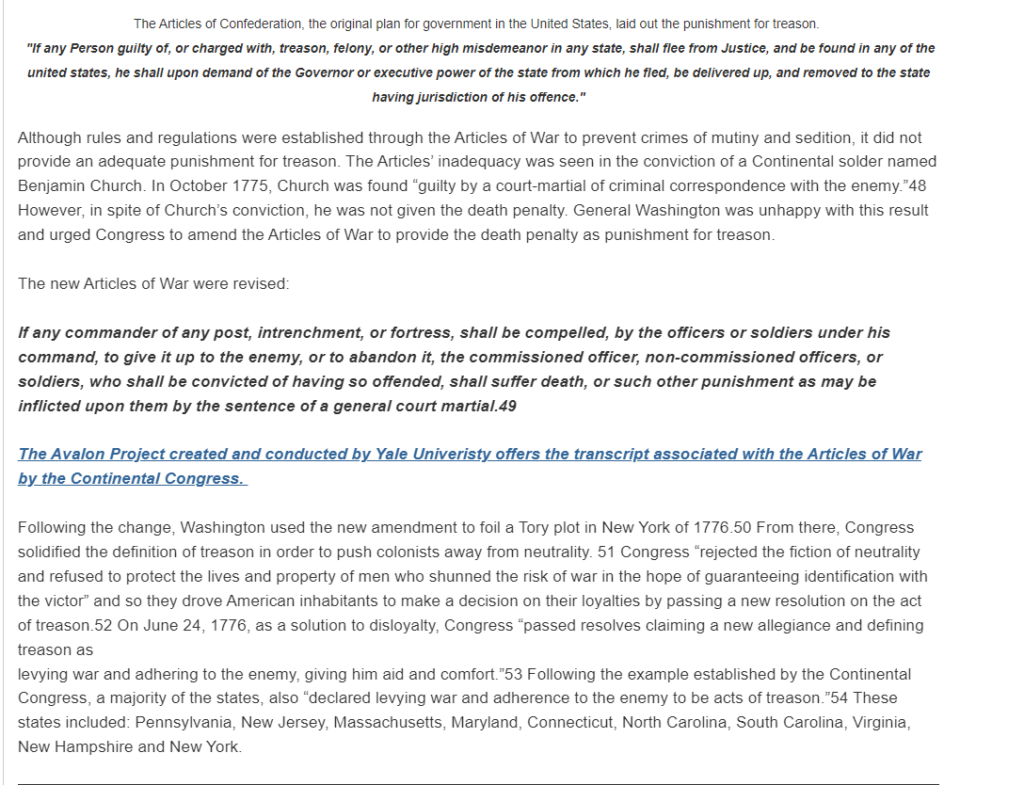
I tried my best to think about what my students would prefer if they were to look through an educational website. Videos are better for capturing the attention of site visitors. It also helps explain a heavy topic better than me reexplaining what was detailed in King George’s Proclamation of 1775.

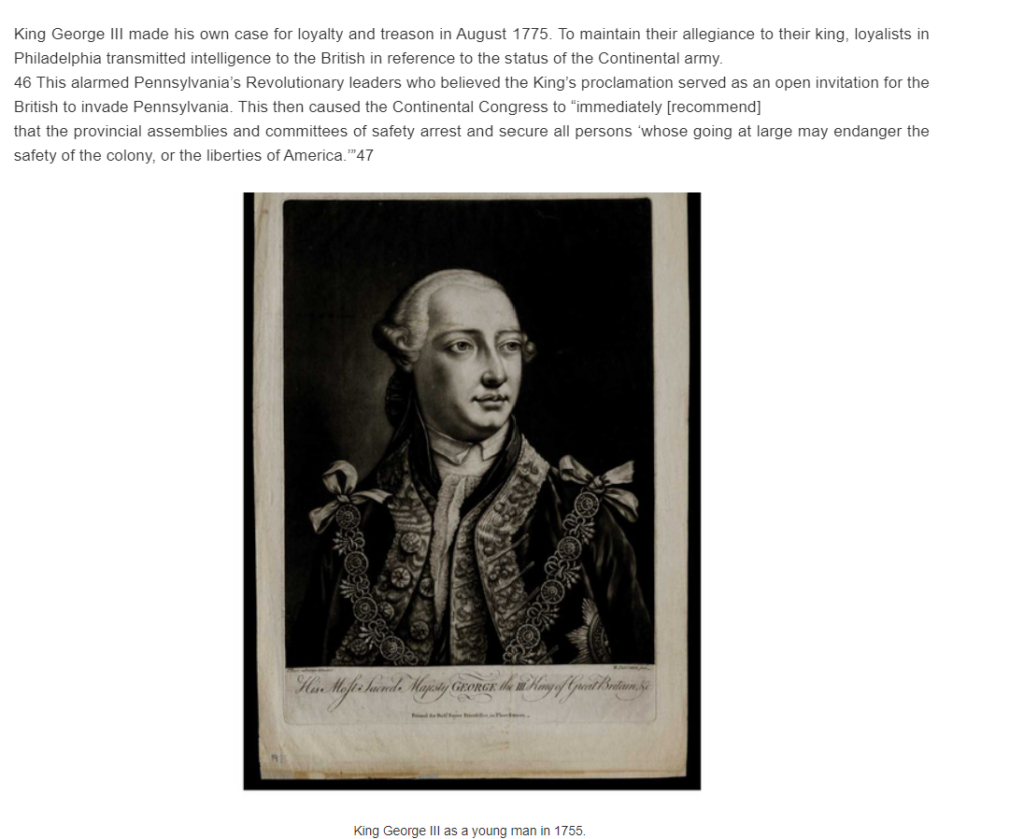
I added a photo of King George III since he was mentioned in this exhibit.

I did my best to chunk up the exhibits and be consistent and thorough in the narrative I was trying to explain in each exhibit.

I also provided a link to a collection of Congressional transcripts to allow visitors to see what was said in the Articles of War.

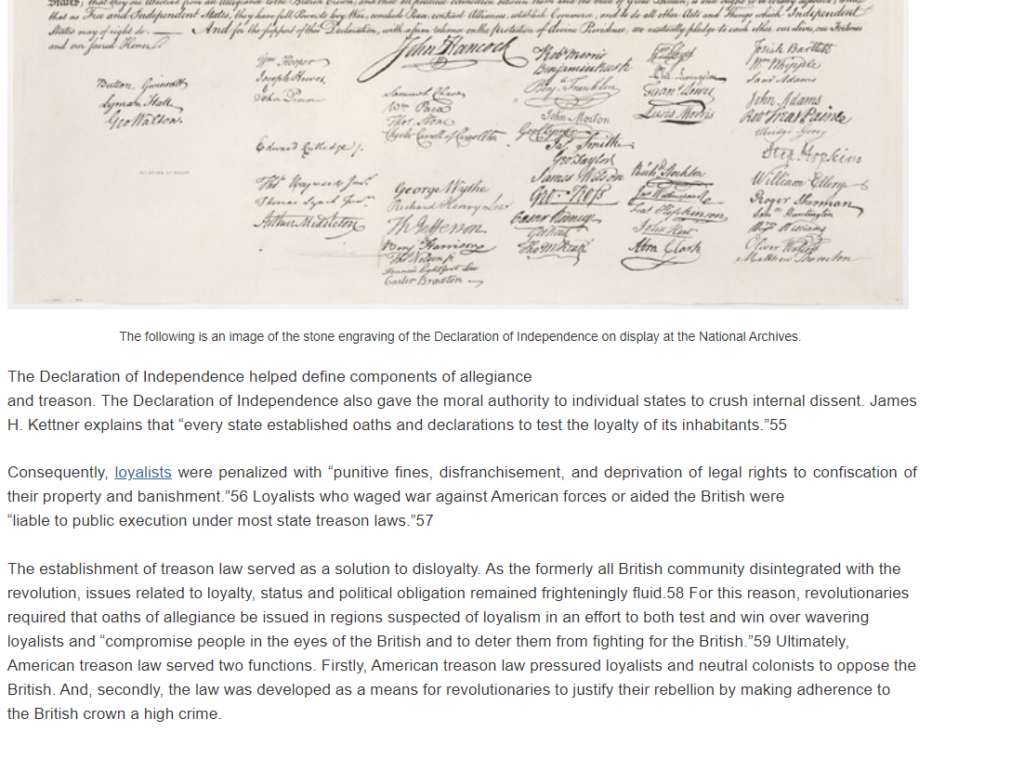
I then decided to add an image of the Declaration of Independence since ideas of allegiance and treason can be traced backed to the Declaration of Independence.

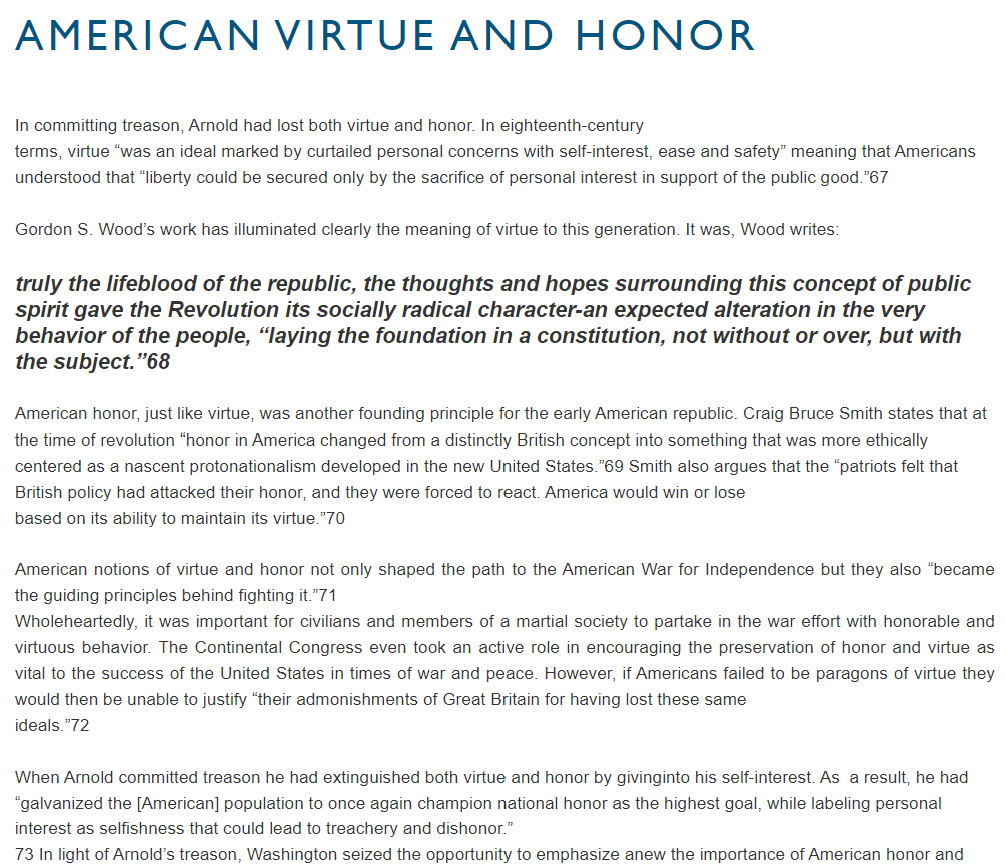
In the next couple of images, you will see that my exhibits become more reliant on text and primary source information than the others that were previously seen. I’m having some diffulty finding images that are relevant for these next couple of sections.

Much of the Benedict Arnold and Nationalism Exhibit is primary source and text heavy as they provide an analysis of the primary sources.


The next step would be to provide links in the metadata back to the areas in which I retrieved some of my resources.

Project Progress Update 3

Since my last update, I have accomplished the following:

  • Finished the first draft for my exhibit “Benedict Arnold’s Role in the American Revolution.”

  • Added an Introductory Page related to the site to inform visitors on the site’s focus.

  • Created skeletons for two additional exhibits called: American Treason Law, Allegiance, Virtue and Benedict Arnold and Nationalism

I have also deleted old exhibits and pages that are no longer relevant for my site. I have reordered my simple pages to have my introductory page first. The order is the following.

For my newest exhibits, I need to locate images related to the passages written. As usual, I also need to work on my footnotes.

Project Progress Update 2

To be honest, I was not happy with the way in which my exhibits were set up. I originally planned to have three sub exhibits:

The Heroic Arnold

The Treacherous Arnold

American Treason Law, Allegiance and Virtue


Although I managed to update the original Heroic Arnold with the necessary historical information I felt there was an overload of information on one individual webpage. This original setup was not user-friendly and would easily tire out the reader-especially secondary students like Faith Cooper. Thus, I chose to separate the historical information in the Heroic Arnold section into more sub exhibits. 

This is the current exhibit setup:

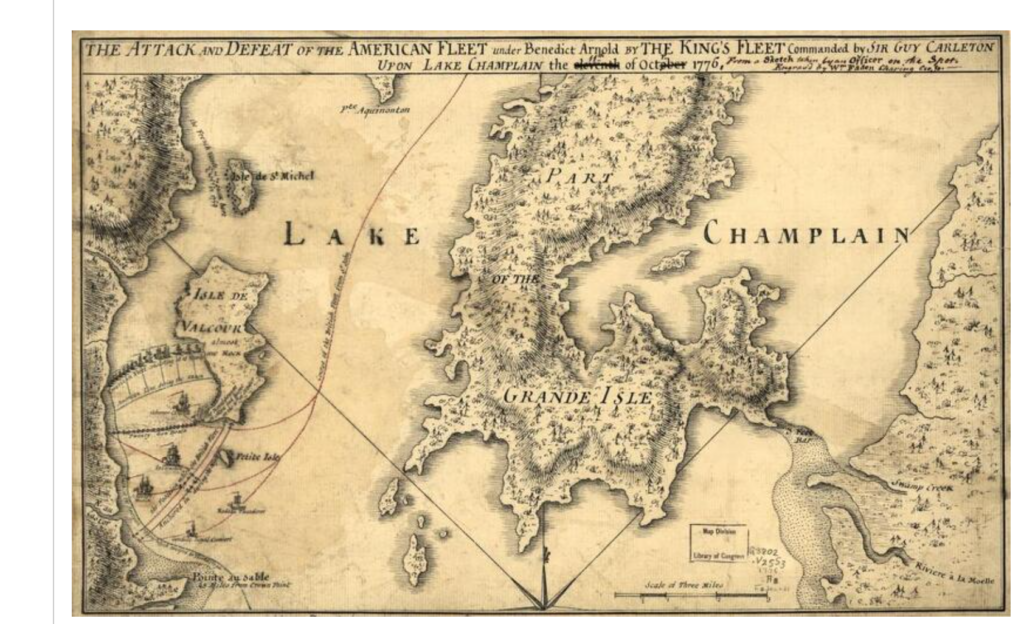
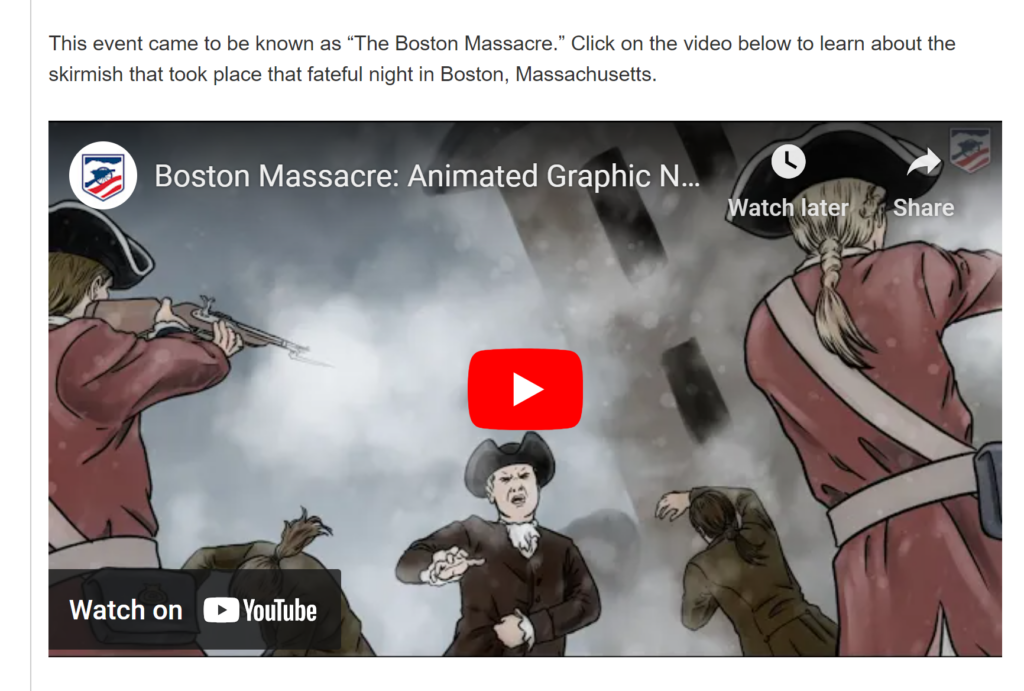
The sub exhibits go in chronological order and detail certain stages of Arnold’s life. The stages are associated with Arnold’s involvement in the American Revolution. To make these sub exhibits pop, I decided to incorporate relevant artifacts and images associated with events discussed in historical narrative. I also provided embedded historical videos created by the American Battlefield Trust as a resource for further information on the Boston Massacre, Boston Tea Party, Battles of Lexington and Concord and the Battle of Valcour Island. The videos themselves are more student friendly and allow for me to differentiate and diversify the historical content for teachers and students. 

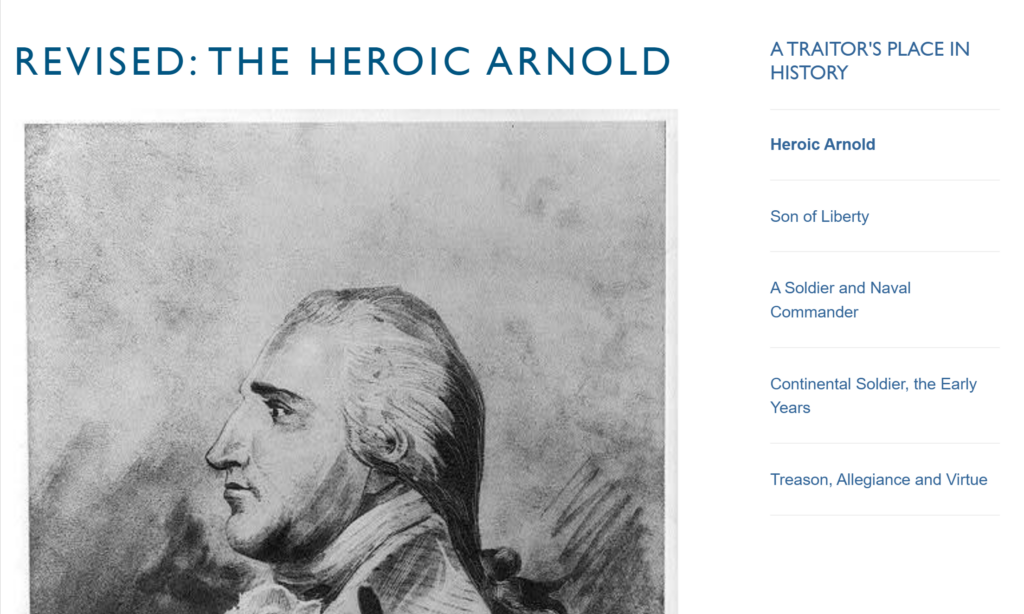
Relevant Images Examples:


Video Example:


Challenges:

  • Making the site user friendly
  • Revamping the original layout of the exhibits
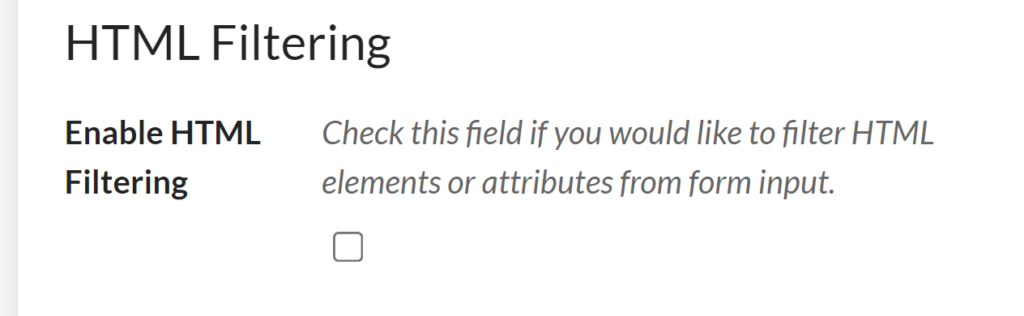
  • The YouTube Import Plug-In did not work so I had to rely on embedding YouTube Videos within the text blocks. Initially, I had issues with embedding the YouTube videos in the text because I hadn’t unchecked the box for “Enable HTML Filtering” fortunately I was able to gather tips from Omeka forums on how to fix these issues.
I just needed to uncheck this box in the security settings in Omeka to enable embedded videos.

Next steps: I need to update and format my footnotes correctly. I need to finish writing the historical information related to Treason, Allegiance and Virtue as well as create my exhibit for Arnold and Nationalism. 

Project Update 1

In terms of my prototype project, I am in the process of creating the exhibits related to my Benedict Arnold site. I am currently working on one of two or three exhibits that will be featured on the site. The first exhibit will be titled “A traitor’s place in history.” In this exhibit there will be three sub exhibits titled:

  • The Treacherous Arnold (Will explain Arnold’s treason)
  • American Treason Law, Allegiance and Virtue (Will explain the historical context surrounding treason law, and american virtue to explain the impact of Arnold’s actions in 1781) 

I uploaded the following plug-ins to assist in the curation of my site such as:

  • Docs Viewer (to allow users to see historical documents into the site)
  • Exhibit Builder (to allow administrators to build exhibits)
  • Exhibit Image Annotation (to allow administrators to annotate primary documents and highlight important details surrounding the object)
  • Omeka Footnotes JS (to allow administrators to site their historical research)
  • PDF Embed (to allow administrators to embed PDFs related to historical documents on the site)
  • Text Annotation (a differentiation tool that allows site users to highlight and mark the site text for their own historical research and knowledge)
  • Timeline (to allow administrators to create a timeline as a differentiation tool)
  • YouTube Import (to allow administrators to embed future YouTube videos into the site for educational purposes)


Challenges and Next Steps:

I am having issues formatting my footnotes in a way that is not obtrusive to the text that I have provided for the sub-exhibits. I know I need to reformat the text as a result as well as divide the information I have provided into the sub-exhibit into another sub-exhibit. I was hoping the footnotes plug-in would simply provide a small pop-up that shows the citation information instead of giving a page break for traditional footnotes . Footnotes typically disrupt the the flow of the reading. The footnote numbers are also out of order making me want to correct this by the next update. I am also having issues finding copyright free images to include in my exhibits. Additionally, I need to upload my images and text related to the sub-exhibits: Treacherous Arnold and American Treason Law, Allegiance and Virtue. So, I have a bit of work ahead of me.