Punishment for Treason in the Articles of War
Although rules and regulations were established through the Articles of War to prevent crimes of mutiny and sedition, it did not provide an adequate punishment for treason. The Articles’ inadequacy was seen in the conviction of a Continental solder named Benjamin Church. In October 1775, Church was found “guilty by a court-martial of criminal correspondence with the enemy.”48 However, in spite of Church’s conviction, he was not given the death penalty. General Washington was unhappy with this result and urged Congress to amend the Articles of War to provide the death penalty as punishment for treason.
The new Articles of War were revised:
If any commander of any post, intrenchment, or fortress, shall be compelled, by the officers or soldiers under his command, to give it up to the enemy, or to abandon it, the commissioned officer, non-commissioned officers, or soldiers, who shall be convicted of having so offended, shall suffer death, or such other punishment as may be inflicted upon them by the sentence of a general court martial.49
Following the change, Washington used the new amendment to foil a Tory plot in New York of 1776.50 From there, Congress solidified the definition of treason in order to push colonists away from neutrality. 51 Congress “rejected the fiction of neutrality and refused to protect the lives and property of men who shunned the risk of war in the hope of guaranteeing identification with the victor” and so they drove American inhabitants to make a decision on their loyalties by passing a new resolution on the act of treason.52 On June 24, 1776, as a solution to disloyalty, Congress “passed resolves claiming a new allegiance and defining treason as levying war and adhering to the enemy, giving him aid and comfort.”53 Following the example established by the Continental Congress, a majority of the states, also “declared levying war and adherence to the enemy to be acts of treason.”54 These states included: Pennsylvania, New Jersey, Massachusetts, Maryland, Connecticut, North Carolina, South Carolina, Virginia, New Hampshire and New York.
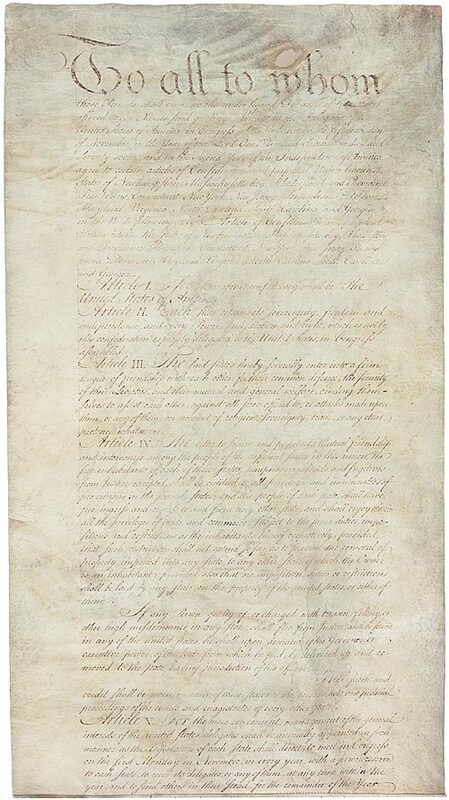
The Library of Congress offers an introspective on the Articles of Confederation from curator, Nathan Dorn.