A Soldier and Naval Commander
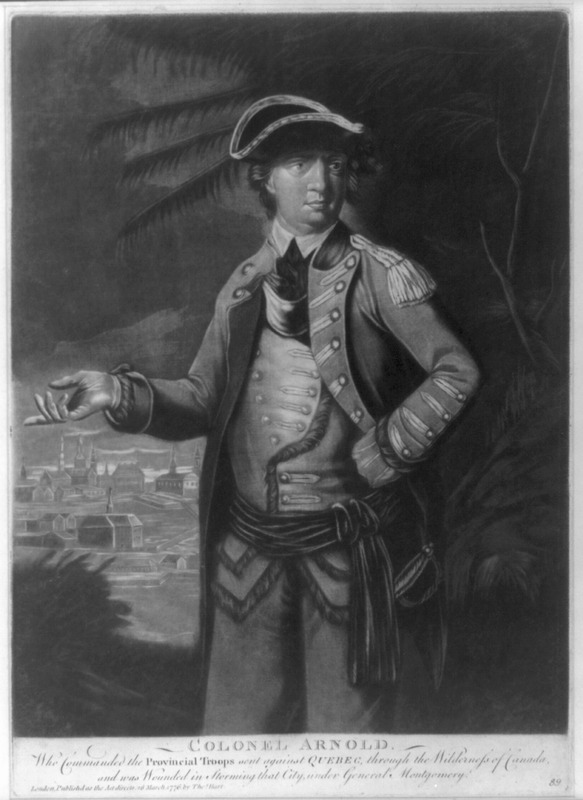
The first occasion in which he was a soldier was at Fort Ticonderoga, New York, on May 10, 1775. Arnold along with Ethan Allen and the Green Mountain Boys were tasked with capturing Fort Ticonderoga. Martin describes the commencement of the capture:
The rebel band launched its assault from Hand’s Cove. Short on watercraft, the first challenge was to get across a mile wide expanse of lake amid turbulent gusts of thrashing rain. After only 83 of the available pool of some 250 men had reached the New York side, Allen and Arnold decided to press ahead. They did not want to lose the element of surprise or the advantage of maneuvering under cover of darkness…For a half mile they followed a narrow path near the water that brought them around the fort to its south side. There the strike force furtively took position, preparing to burst through the main wicket gate leading to the interior parade
ground and barracks.18
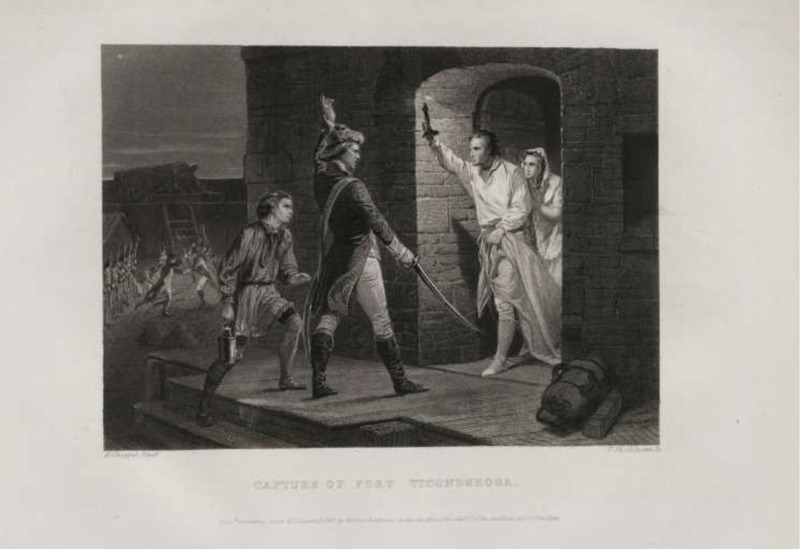
Arnold and Allen captured Ticonderoga swiftly as the fort was lightly garrisoned and used as a storage facility for military supplies. However, tensions between Arnold and Allen commenced once Ticonderoga was captured and Allen let his Green Mountain Boys run “loose to ransack and plunder the fort and its environs.”19 The Green Mountain Boys took it upon themselves to get drunk from a ransacked liquor supply. Their behavior revolted Arnold as Allen’s troops were acting nothing like disciplined patriot troops. Martin explains that Arnold found himself reduced to “a private person often insulted by him [Allen] and his officers.”20
In spite of his mistreatment by Allen and the Green Mountain Boys, Arnold continued to serve in the Continental Army and demonstrate valiant efforts as a military officer. Once Arnold was placed in command of the Champlain forts and received 100 more Continental troops at Ticonderoga, the feud between Arnold and Allen subsided.21
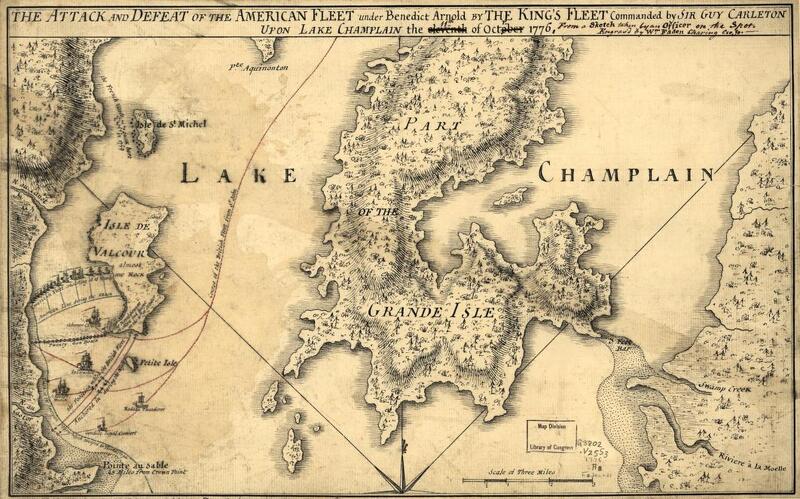
Arnold then performed admirably on October 11, 1776, at the Battle of Valcour Island by fending off a British invasion. The Battle of Valcour Island took place on Lake Champlain, the only pathway the British could use to invade America from the north. In July 1776, months before the battle’s commencement, the British were in the midst of building a freshwater fleet, while the Patriots were at Lake Champlain, improving their own shipping. It was a race for “naval supremacy.”22
Arnold worked tirelessly to strengthen Patriot naval power and Major General Gates, field commander of Schuyler’s Northern Army, relied upon Arnold for his nautical knowledge.23 Arnold’s knowledge proved useful in October 1776 as the Continental naval fleet fought a fierce battle against the British fleet. In spite of their efforts, the battle resulted in a “battered and bloodied American flotilla” that pressed Commodore Arnold to fall back from the fight.24
Then on the night of October 12, from “the cover of a heavy fog and with muffled oars, Arnold’s battered craft followed each other in single file close to the western shore, slipping past the British squadron.”25 Although American forces did not win the Battle of Valcour Island, it was heralded as a successful distraction for the British that then “bought the Patriots crucial time” to build formidable fortifications.26
The following video further explains the significance of the Battle of Valcour Island:
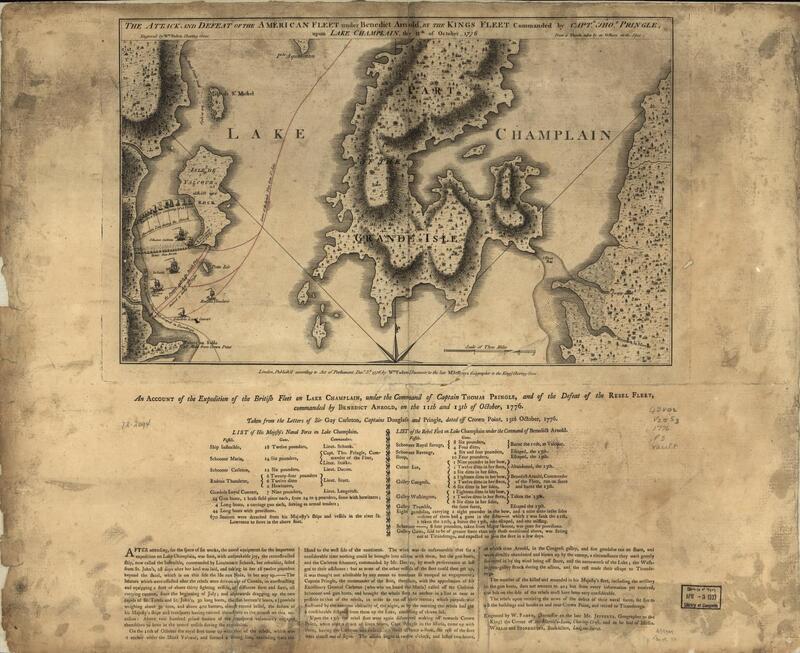
According to Brumwell, during the Valcour Island action Arnold’s fellow patriots “chiefly gloried in the dangerous attention he paid to a nice point of honor, in keeping his flag flying, and not quitting his galley till she was in flames, lest the enemy should have boarded and struck it.”27 Arnold’s critics such as Brigadier General William Maxwell and Brigade Major James Wilkinson did not understand the importance of his actions.28 They only saw a military defeat. In spite of what his critics thought, however, Arnold had “prevented the British fromtaking Fort Ticonderoga and continuing to Albany and, eventually, to New York. And perhaps just as important, while Washington’s army to the south continued to suffer setback after setback, Arnold had shown that it was possible to stand up and fight.”29
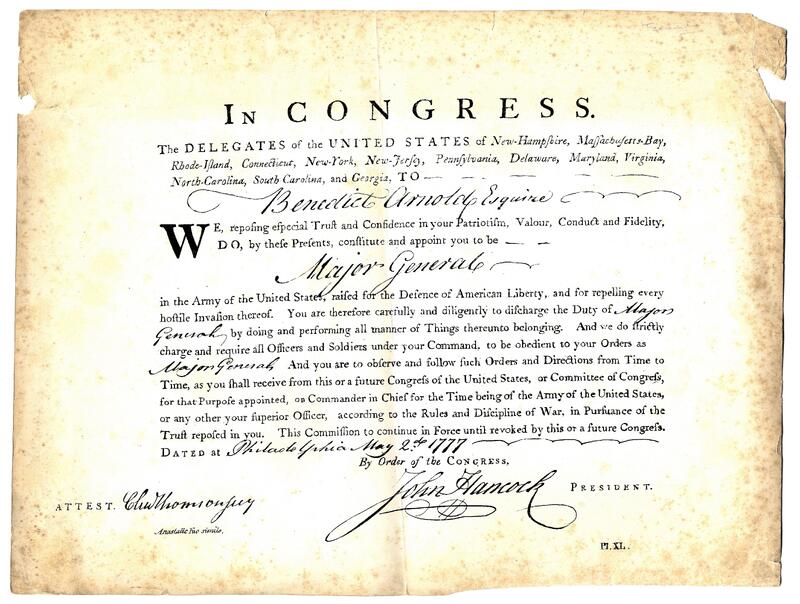
On April 28, 1777, Arnold almost single-handedly stopped the British from raiding the American supply post at Danbury, Connecticut. His heroic actions prompted Congress to promote him to major general. The partially printed document reads, 'We, reposing especial Trust and Confidence in your Patriotism, Valour, Conduct and Fidelity, DO, by these Presents, constitute and appoint you to be Major General.' Autograph document signed, one page.
Arnold’s military prowess was on display again at the Battles of Saratoga which began on September 12, 1777. For fourteen days, American troops fought against British General John Burgoyne’s troops. In the midst of the battles, the two leading American generals, Horatio Gates and Benedict Arnold, engaged in a war of words over the best military strategy. Their heated exchange resulted in Gates ordering Arnold to remain in his quarters for the duration of the battle. However, Arnold disobeyed Gates’ orders, mounted his horse, and rode on to the battlefield.
Martin explains the full length of Arnold’s actions:
Arnold’s fearlessness reflected the intensity of purpose with which he approached combat. Once engaged, he had the capacity to block out any concern for his own safety and focus on the sole consideration of finding some means to defeat the enemy…Should he succeed, the day would belong to the Patriot force, as well as to the cause of American liberty and to himself.30
Arnold’s actions at Saratoga proved successful. His presence on the field startled the British troops and boosted American morale as he shouted order after order, pointing out flaws in the British line. Arnold’s military command was cut short, however, when “a platoon of retreating Hessians leveled their weapons and launched a final volley of fire in his direction.”31 A musket ball smashed into the thigh bone of Arnold’s left leg and killed his horse. The fallen animal pinned Arnold to the ground as “he shouted for the riflemen behind to ‘Rush on!’”32 A soldier named Henry Dearborn, who had been with Arnold when he had been injured on his March to Quebec, came to his aid.33
When asked about his health, Arnold allegedly said to Dearborn, “in the same leg, I wished it had passed [through] my heart.”34
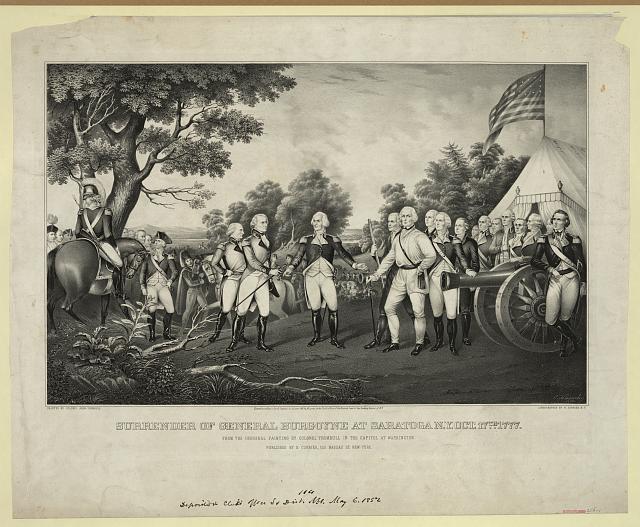
Within seconds, Arnold had passed out from the pain. The darkness that had befallen on the battlefield made it unclear who won. But, Burgoyne pulled his troops back across the Great Ravine where his “force hung on for a day in the face of annoying rebel fire before commencing a withdrawal that ended with formal surrender near the village of Saratoga on Friday, October 17.”35
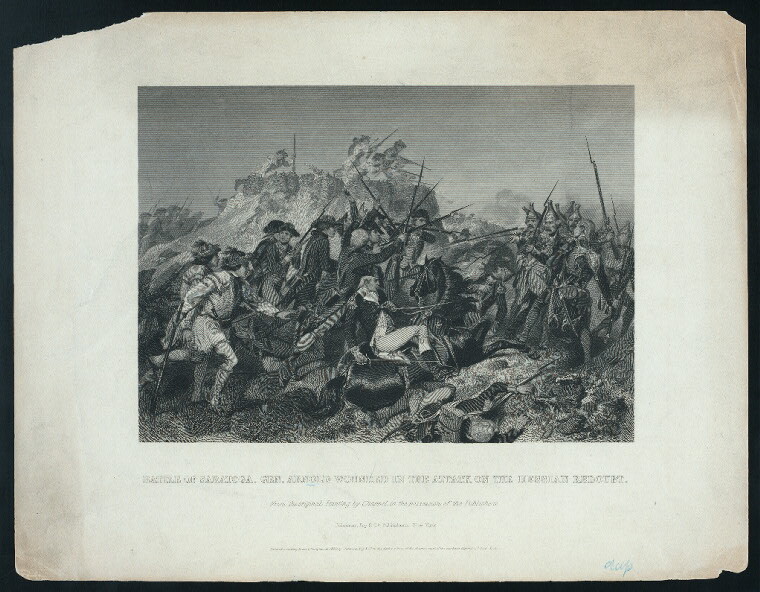
Battle of Saratoga., General Arnold Wounded in the Attack on the Hessian Redoubt.
Although Arnold had played a role in assisting with the American victory on the battlefield, Horatio Gates received credit for capturing Burgoyne’s army. On November 4,1777, the Continental Congress voted to award Gates for his performance at Saratoga with a “‘medal of gold’ as a symbolic representation of eternal gratitude from ‘the American Congress to Horatio Gates, the leader.’”36 The actions taken by Congress officially commemorated Gates as “the hero of Saratoga.”
37
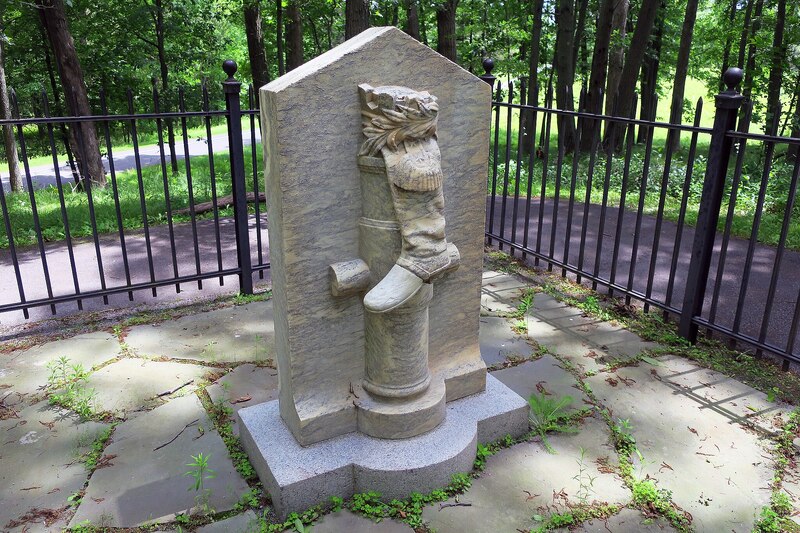
Nevertheless, Arnold received a considerable amount of praise for his heroic endeavors. For example, a hero’s welcome awaited Arnold when he returned to his home in New Haven, Connecticut. Accordingly, “the officers of the army, the militia, the cadet company, and a throng of the most respectable citizens of New Haven went out to welcome the gallant and still suffering soldier, to testify their esteem and conduct him to his home.”38
Additionally, Arnold’s name became “a familiar word at many a home and beside the fireside of many a log cabin on the banks of the Hudson, the Mohawk and the New York Lakes, as well as in New England, and was honored and cherished.”39 As Arnold healed, George Washington desired to have his fighting general return to service as soon as possible.
On January 20, 1778, Washington wrote to Arnold:
May I venture to ask whether you are upon your legs again, and if you are not, may I flatter myself that you will be soon? There is none, who wishes more sincerely for this event, than I do, or who will receive the information with more pleasure. I shall expect a favorable account upon the subject; and as soon as your situation will permit, I request that you will repair to this Army, it being my earnest wish to have your services in the ensuing campaign.40
Clearly, Washington was pleased with Arnold’s performance at Saratoga and saw him as avaluable asset in the war against the British.
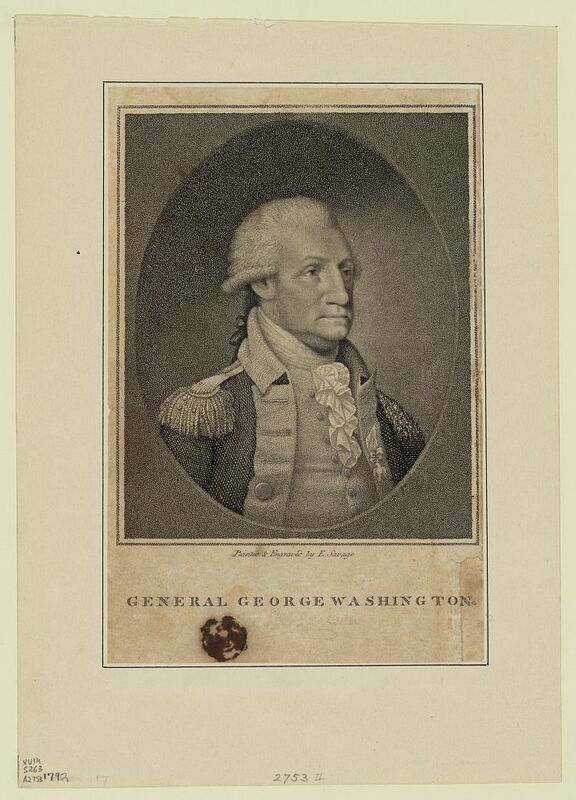
Months later, Washington sent Arnold a formal invitation to join him at Valley Forge. Although he had not fully recovered from his wounds at Saratoga, Arnold accepted and arrived at camp on May 21, 1778. While there, Washington offered Arnold with a new command, a military governorship of Philadelphia, eastern Pennsylvania, and southern New Jersey.41 Washington found the governorship as a suitable alternative to keeping Arnold involved in the Continental army in spite of his inability to sit on a horse and command troops on a battlefield. Arnold graciously accepted the governorship. Days later, Arnold finally pledged an oath of allegiance to the United States, signifying his dedication to the American cause.
Arnold took his oath on May 30, 1778, where he agreed to the following:
I Benedict Arnold Major General do acknowledge the United States of America to be Free, Independent and Sovereign States, and declare that the people thereof owe no allegiance or obedience to George the Third, King of Great Britain; renounce, refuse and abjure any allegiance or obedience to him; and I do swear that I will, to the utmost of my power, support, maintain and defend the said United States against the said King George the Third, his heirs and successors, and his or their abettors, affiliates and adherents, and will serve the said United States in the office of Major General which I now hold, with fidelity, according to the best of my skill and understanding.42
The bulk of the document was pre-written for Continental officers, leaving open name, rank and assurance that they swore to uphold the United States against the sovereign of Great Britain. In Arnold’s case, he was sworn in as a major general. All Continental officers were expected to uphold the oath. And, for a while, Arnold would follow through with his promise. He broke his oath of allegiance, however, by the end of 1779.