The Treacherous Arnold
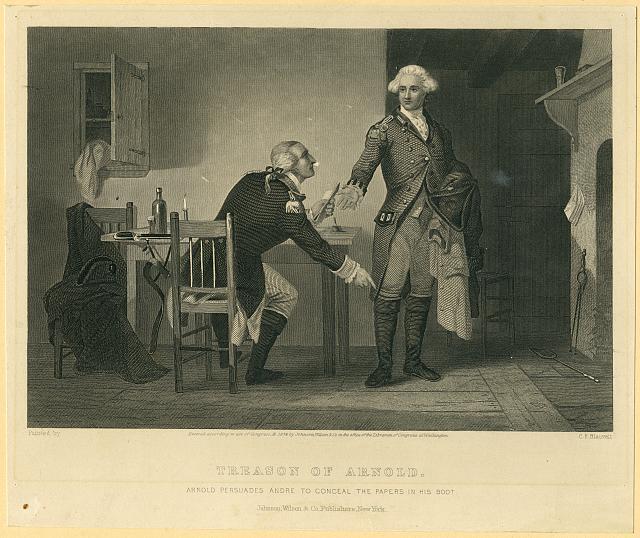
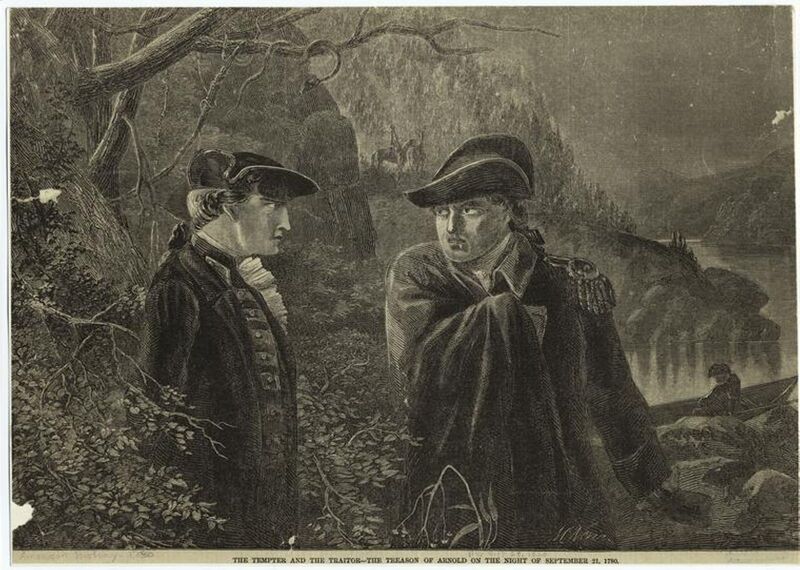
In June 1779, Arnold began his secret correspondence with Great Britain. Arnold’s main contact was Major John André. They carried on correspondence through the use of pseudonyms. Arnold was “Gustavus Monk” while André was “John Anderson.”60 Arnold traded secrets about the Continental army and made arrangements to hand over the American fort at West Point. West Point was believed to be “the most important military position in the colonies.”61
The UM Clements Library Online provides an exhibit that analyzes and decodes the infamous letter in which Arnold agrees to sell West Point for 20,000 Pounds.
In exchange, Arnold bargained to be rewarded with twenty-thousand pounds sterling and a brigadier general’scommission in the British army in exchange for the West Point plans, assistance in taking it and the surrender of the garrison. Additionally, Arnold established preconditions that if his plans fell through he would be rescued by the British. After a year of correspondence that was carried on with fictitious names, Arnold planned to meet John André in person on the night of September 21, 1780. The next day, they finalized their plans related to the surrender of West Point. Upon leaving, André had stuffed “plans of the works, their armament, the number of troops, etc., were furnished by Arnold to André, and concealed by the latter in his boots, between his stockings and his feet.”62
André left at nightfall to make his two-day journey back to the Vulture. On his way,
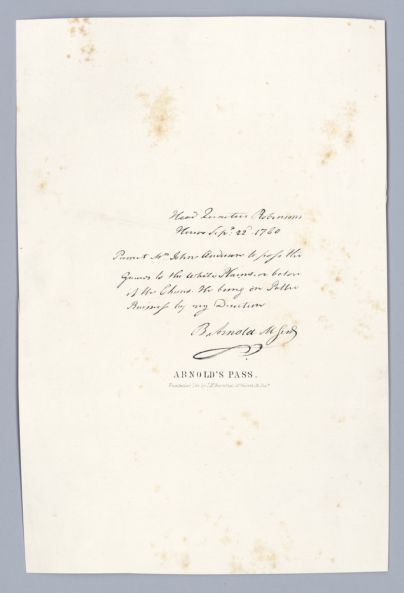
André was stopped by three armed American Patriots, John Paulding, Isaac Van Wert, and David Williams. André had produced his pass from Arnold but it did not convince the Patriots to let him go. Instead, they took André to a nearby thicket to be stripped and searched, and the West Point plans were found.63 André was then taken prisoner to Lieutenant Colonel Jameson, commander of the post at New Castle, New York. Jameson immediately sent the papers to George Washington, who was on his way from Hartford, Connecticut. André had asked Jameson to inform Arnold that a John Anderson, though bearing his pass, was detained as a prisoner. Jameson wrote a statement of the facts to General Arnold and had it sent onward to West Point.64 Upon reading Jameson’s correspondence, Arnold immediately made moves to escape. According to Brown, “the papers found on André got to Washington that afternoon, however, and these, coupled with Arnold's absence from his head- quarters, aroused suspicions that were confirmed by nightfall.”65
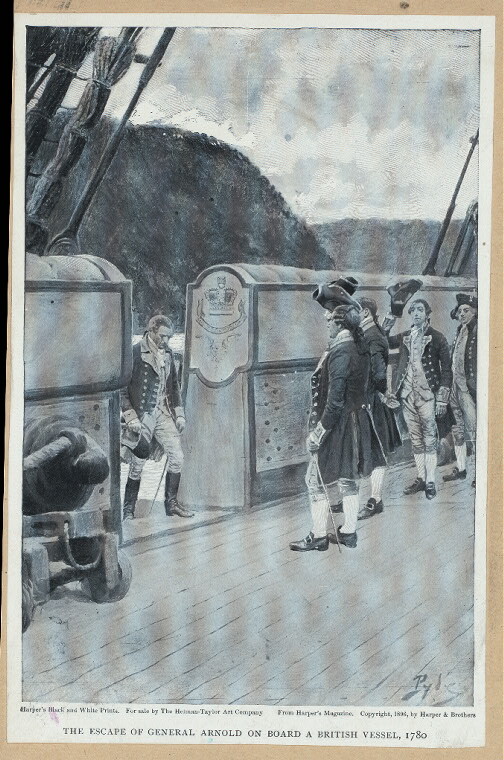
Arnold made his escape aboard the Vulture from which he wrote to George Washington after his conspiracy was revealed. Arnold wrote on September 25, 1780:
The Heart which is Conscious of its Own rectitude, Cannot attempt to paliate a Step, which the world may Censure as wrong; I have ever acted from a Principle of Love to my Country, since the Commencement of the present unhappy Contest between Great Britain and the Colonies, the same principle of Love to my Country Actuates my present Conduct, however it may appear Inconsistent to the World: who very Seldom Judge right of any Mans Actions.66
Arnold’s letter professed that he understood the implication of his actions. He also attempted to justify his conduct. However, General George Washington did not care to hear the excuse, for it was the same principle of love to his country that actuated his conduct to denounce Arnold as the antithesis of American virtue and honor.
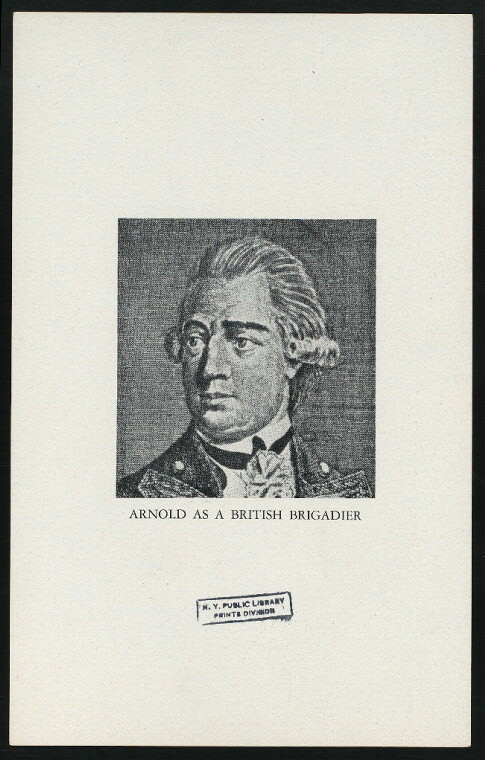
The American Battlefield Trust provides a brief summary of Benedict Arnold's role in the American Revolution: