The Inspiration behind Arnold's Patriotism
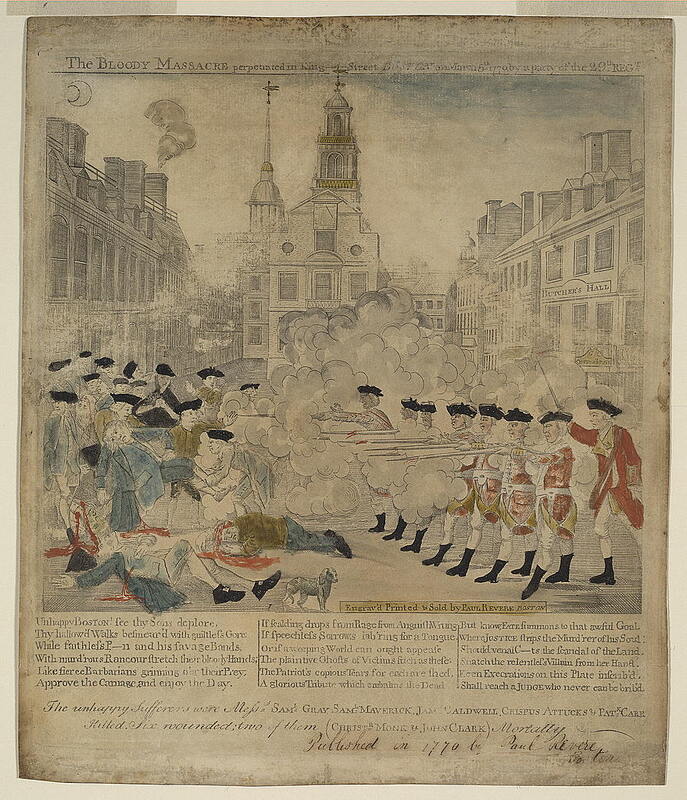
The Boston Massacre
In order to understand the weight of Arnold’s treason, it is important to know his history as an American patriot first. Leading up to the 1770s, tensions between Great Britain and the American colonies rose due to the colonists’ frustration over Great Britain’s constant taxation. However, on March 5, 1770, tempers reached their boiling point when a mob of angry colonists protested the growing presence of British soldiers in Boston, Massachusetts. Colonists armed with snowballs, ice, and stones, pelted the soldiers. In a frightened state of mind, the soldiers fired upon the colonists, killing five citizens.
This event came to be known as “The Boston Massacre.” Click on the video below to learn about the skirmish that took place that fateful night in Boston, Massachusetts.
Good God! Are the Americans all alseep?
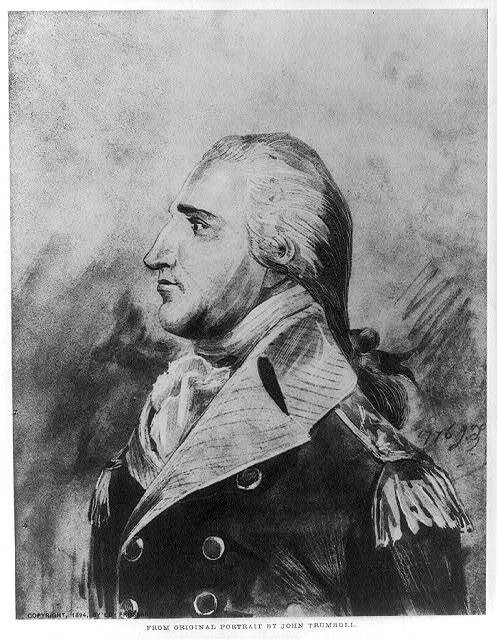
News of what occurred in Boston fueled anti-British sentiment in the rest of the colonies where even American colonists far from the tragedy were outraged. Benedict Arnold was one of these colonists.
Arnold was on a shipping expedition in the West Indies when he received the news of what had unfolded in Boston.
Arnold wrote home to New Haven, Connecticut, on June 9, 1770, that he was “very much shocked the other day on hearing the accounts of the most wanton, cruel, and inhumane murders committed in Boston by the soldiers.”1 Following Arnold’s exclamation of outrage, he called for a bold response of protest:
Good God! Are the Americans all asleep; and tamely yielding up their liberties, or are they all turned philosophers, that they do not take immediate vengeance on such miscreants; I am afraid of the latter and that we shall all soon see ourselves as poor and as much oppressed as ever a heathen philosopher was. 2
James Kirby Martin states Arnold’s concern was animated by “his sense of personal grievance over what he viewed as the inhibiting constraints of British commercial policies.” 3 Undoubtedly, Arnold’s grievance made him more willing to rebel against the British Imperial authority. Arnold’s correspondence from the West Indies foreshadowed his participation in the American Revolution. However, there were other instances in which Arnold demonstrated Revolutionary
fervor and a willingness to challenge the British government.